Sideboard, Buffet or Credenza: What Is the Difference?
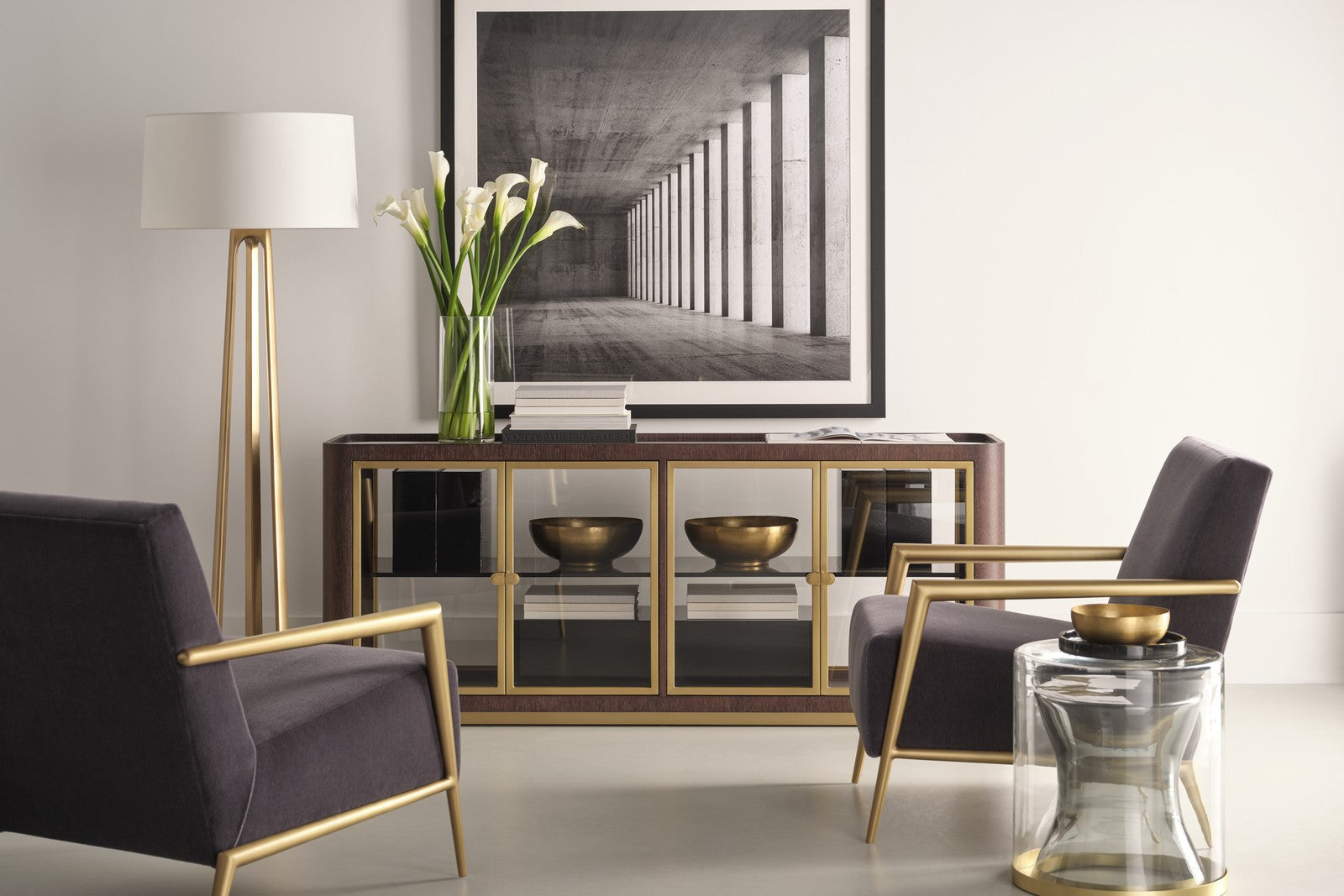
Sideboard, buffet and credenza are related but distinct storage forms. A sideboard is a long, low case used for dining-room serving and storage. A buffet runs taller and heavier in profile. A credenza sits lowest, originally an office piece, now at home across dining, living and media spaces. John Richard, available at Sutter & Vale, makes all three, and the differences show clearly across the sideboards and credenzas collection.
How Do the Three Pieces Differ in Height and Depth?
Height and depth are the clearest physical distinctions between the three forms.
| Piece | Typical height | Typical depth | Primary room |
|---|---|---|---|
| Sideboard | 34 to 38 inches | 16 to 20 inches | Dining room |
| Buffet | 38 to 45 inches | 18 to 22 inches | Dining room |
| Credenza | 28 to 36 inches | 16 to 20 inches | Living, office, dining |
A credenza sits lower to the ground, which is why it works well beneath large mirrors or artwork. The Soleil Four-Door Credenza stands 36 inches high and stretches 90 inches wide, putting it at the generous upper end of credenza height while maintaining the horizontal emphasis the form is known for.
Which Piece Works Best in a Dining Room?
A sideboard or buffet is the traditional dining room choice because the height aligns with countertop level, making it practical for serving. The Conway Four-Door Sideboard, with its silver travertine marble top, illustrates this well: the surface takes a chafing dish or a row of decanters without losing its composure.
If your dining room has high ceilings and a large table, a buffet's greater height fills the wall more proportionally. In a lower-ceilinged space, a sideboard reads better.
Where Does a Credenza Belong Outside the Dining Room?
A credenza suits any room where you want low horizontal storage without the serving-counter association of a sideboard. Living rooms, home offices and primary bedroom suites are all natural fits. The lower profile also makes it a strong candidate beneath a wall-hung television or a large piece of art.
How Do You Choose When the Room Can Take Any of the Three?
Consider wall height, the furniture already in the room and the primary use.
- Tall ceilings and formal entertaining: a buffet or a substantial sideboard
- Mixed-use living and dining spaces: a credenza keeps sightlines open
- Artwork or a mirror above the piece: a credenza's low profile frames the wall better
- Active serving use: a sideboard at counter height is the most practical choice
Frequently Asked Questions
Can a credenza be used as a sideboard?
Yes, functionally they overlap. The distinction is more about height and original purpose than strict use. A credenza placed in a dining room works well for storage; it simply sits lower than a traditional sideboard, which suits some rooms.
Is a buffet always taller than a sideboard?
In standard usage, yes. A buffet typically stands 38 inches or taller, while a sideboard runs 34 to 38 inches. In practice, manufacturers sometimes use the terms interchangeably, so always check the listed dimensions before you buy.
What width should I look for when sizing one of these pieces for a wall?
A general rule is to leave at least 6 inches of wall on each side of the piece, and to keep the piece no wider than two-thirds of the sofa or dining table it faces. For a standard 8-foot dining room wall, a piece in the 70 to 80-inch range usually proportions well.
The Sutter & Vale Team