Maitland-Smith Accent Tables: Small Pieces, Serious Craft
Maitland-Smith accent tables are among the most craft-intensive small pieces available through Sutter & Vale. Each one is built with hand-carved mahogany, inlaid exotic wood veneers, lost-wax cast metal mounts, or hand-tooled leather, applied by skilled workers at every stage. The Maitland-Smith collection covers side tables, cocktail tables, and accent forms across a wide range of materials and finishes.
What techniques go into a Maitland-Smith accent table?
Every piece in the line is built from a short list of demanding, hand-applied processes. The house was founded by a London antiques dealer whose standard was direct: if the inspiration came from antiques, the execution had to match them.
The core techniques across the line:
- Hand-carved mahogany on legs, aprons, and decorative moulding
- Inlaid exotic wood veneers, including marquetry patterns and rosewood and satinwood combinations
- Lost-wax cast metal mounts in brass, verdigris, and antique finishes
- Hand-tooled leather on tops and slide surfaces
The Marlborough Occasional Table, a set of two nesting tables, shows marquetry veneer accents on a compact footprint. The Mckinley Occasional Table pairs sienna leather slides with verdigris brass accents on an Aged Regency mahogany body. These are not applied at the end of production as decoration. They are built into how each piece is made.
How do stone and metal details change the look of an accent table?
Stone and cast metal are the two fastest ways to read quality at a distance, and Maitland-Smith uses both with discipline.
The Heart Accent Table carries a petrified stone top on a two-tier walnut-tone base. Petrified stone varies in pattern by nature, so no two tops are identical. The Clamstone Cocktail Table takes that further: a polished clamstone base supports clear tempered glass. The stone does the visual work; the glass keeps the surface practical.
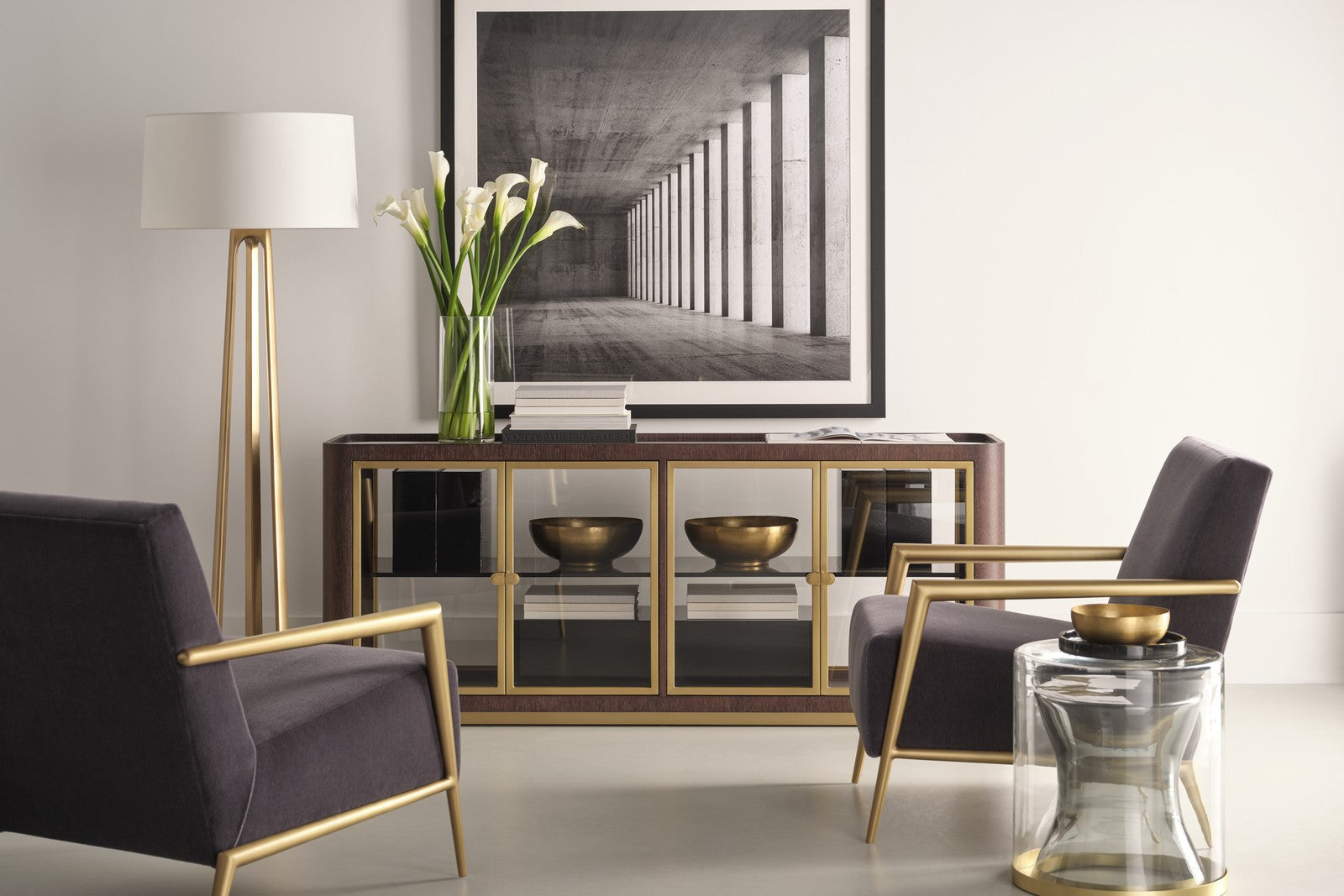
For metal, the Closs Cocktail Table is the clearest example in the line. A polished brass structure carries an inlaid abalone shell top. The abalone shifts in the light at every angle. It reads as found rather than manufactured, which is the quality a well-chosen accent is meant to deliver.
Which Maitland-Smith side table works in a smaller room or beside a sofa?
Proportion matters more than style when space is limited. A side table placed next to a sofa or chair should sit at roughly arm height, with a footprint small enough to pull forward when needed and tuck back without blocking traffic.
| Table | Form | Key Detail |
|---|---|---|
| Serene Occasional Table | Round, single column | Rosewood and satinwood veneer, gilded feet |
| Tray Occasional Table | Round, removable tray top | Leather top, Aged Regency finish |
| Boudoir Occasional Table | Oval | Antique brass gallery, light mahogany finish |
| Compass Occasional Table | Round | Marquetry top, antique brass accents |
Round and oval forms with a single pedestal or slender legs move easily and leave sightlines open. The Tray Occasional Table adds a layer of function: the removable veneer tray lifts off for serving and returns as a surface. That dual use suits a reading chair or a bedroom corner without adding bulk to the room.
Frequently Asked Questions
Are Maitland-Smith accent tables made entirely by hand?
The processes the house names, including hand-carved mahogany, inlaid veneers, lost-wax cast metal mounts, and hand-tooled leather, are all hand-applied at the stage they are named for. That level of handwork is one reason each piece is treated as individual rather than as part of a uniform run.
What finishes are common across the Maitland-Smith accent table line?
Aged Regency, light mahogany, distressed walnut tone, and Black Vendome appear across the side and accent table range. Most finishes are applied by hand and include deliberate distressing or antiquing that gives the surface a depth a uniform sprayed finish cannot replicate.
Can Maitland-Smith accent tables work in a contemporary room?
Yes. The marquetry, stone, and brass pieces read as objects in their own right and hold their ground beside clean-lined modern furniture. A petrified stone top or an abalone inlay does not require a traditional context to carry visual interest; the material does that work on its own.
The Sutter & Vale Team