What Does Made to Order Mean for Furniture Delivery?
Made to order means your piece does not exist until you place the order. Century Furniture, available through Sutter & Vale, builds each sofa, chair, and case piece to the specifications you choose, including fabric, finish, and detail. Nothing ships from a warehouse shelf. The lead time is longer than in-stock, and that lead time is the reason the piece fits your room.
Why does made to order take longer than in-stock furniture?
Because construction begins after your order is confirmed. Century's upholstery team in Hickory, North Carolina selects the frame, cuts the chosen fabric, and builds the piece start to finish for you. Casegoods go through a finish process of roughly 25 steps, including hand distressing, hand waxing with a beeswax and carnauba formula, and final lacquering. That sequence cannot be compressed without changing the result.
What choices do you actually make, and when?
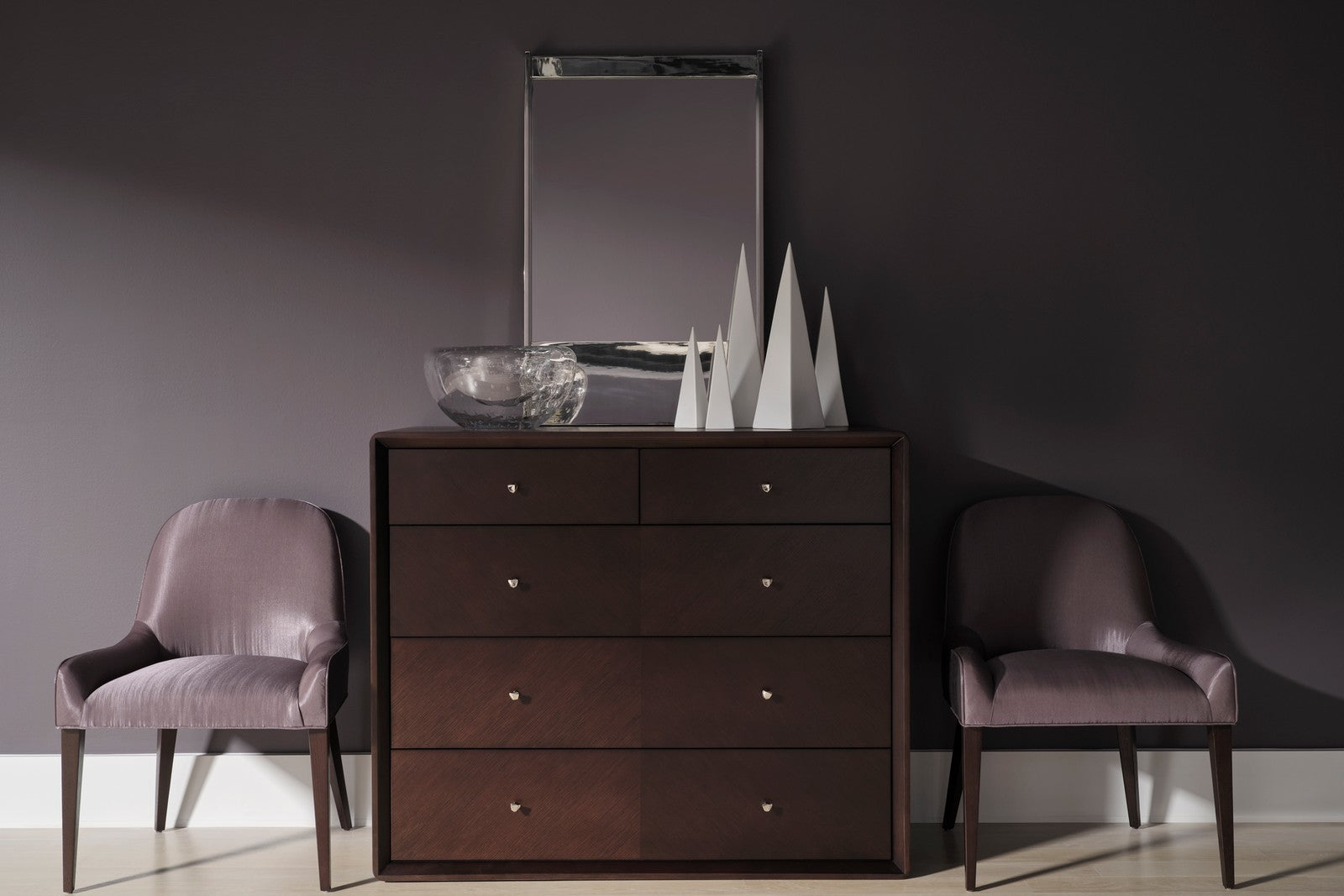
You make them before the order is placed. For upholstery, that means selecting from a fabric grade ladder that runs from grade 1 through grade 92, plus leather grades L1 through L13. You can also specify contrast welt, contrast cord, or nailtrim, such as a 3/8-inch smooth brass nail. For casegoods, you choose a finish tier and a sheen level, which Century specifies numerically:
| Sheen level | Codes |
|---|---|
| Low | 5, 10 |
| Medium | 20, 30 |
| High | 50, 70 |
You also choose a distressing grade, from none through Very Light, Light, Medium, and Heavy. Light is the house default. Once the order is submitted, those choices are locked and production begins.
How do you plan a room around a made-to-order timeline?
Order the made-to-order pieces first. Work your paint, flooring, and lighting schedule around the furniture arrival, not the other way around. Because Century builds in Hickory from predominantly domestic materials, it can give your Sutter & Vale contact a specific production window rather than an open estimate. Ask for that window in writing before you finalize your room schedule.
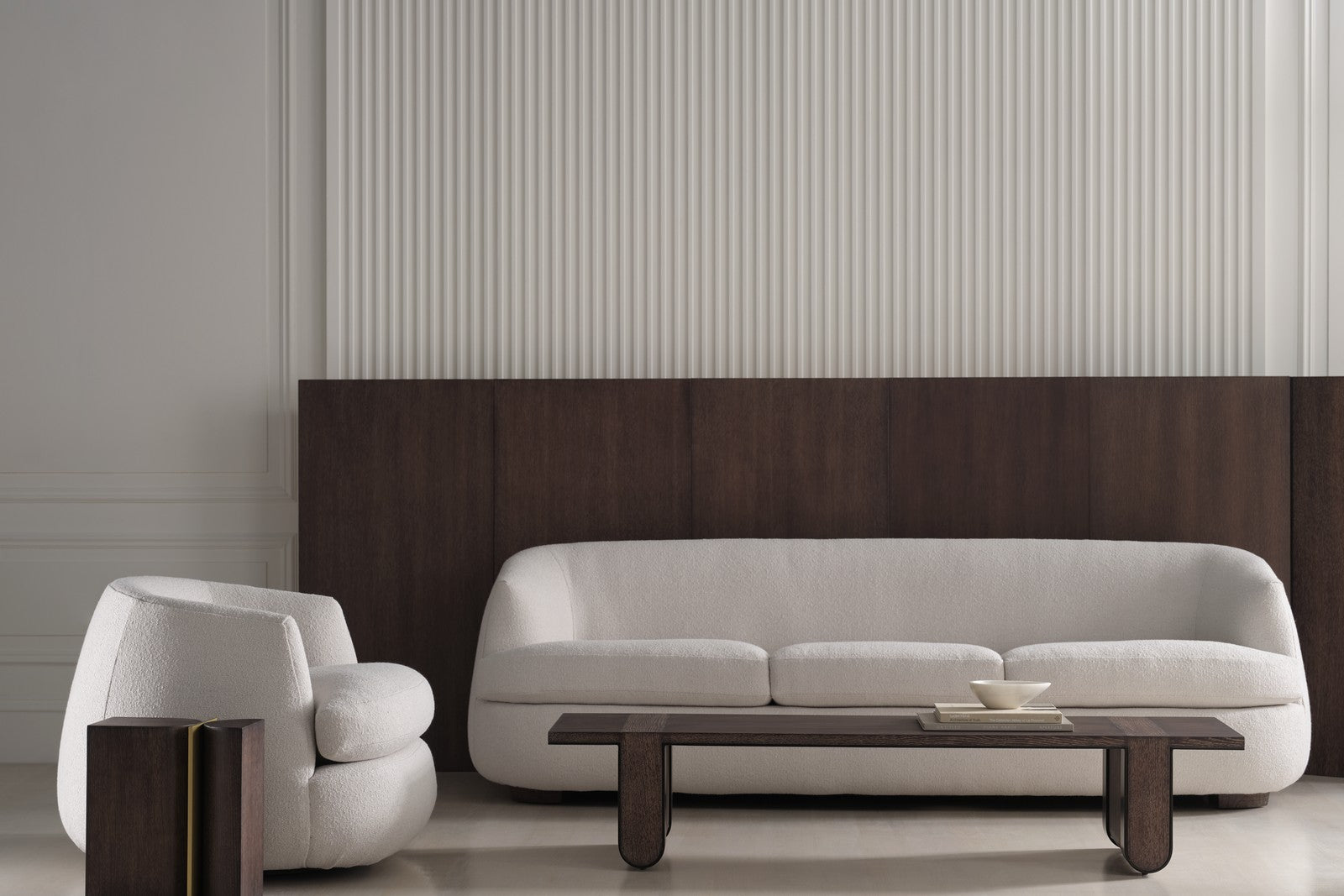
For upholstered seating, browse the sofa collection to confirm the frame you want before committing to fabric. The Tangier Sofa and the Colton Sofa are good examples of frames where the silhouette is fully resolved and the specification work is purely in material and finish.
Does made to order mean you can change your mind mid-production?
Generally, no. Once Century's workroom has cut your fabric, the order is in progress and changes are not possible without starting again. Confirm your fabric sample against your actual rug and wall color in your own light before approving the order. Request a large sample, at least a full repeat, so the scale reads correctly. For leather, confirm the hide grade and color under the room's light source, whether natural or artificial.
Frequently Asked Questions
What is COM, and does it apply to made-to-order furniture?
COM stands for customer's own material. It means you supply a fabric from outside the manufacturer's library, and the workroom builds the piece in that fabric instead. Century supports COM across its upholstery program, which makes it possible to match a fabric you have already sourced for drapery or cushions.
Will a made-to-order piece look exactly like the photograph?
The frame, proportion, and construction will match. The fabric color and texture may read differently depending on your room's light. Photography is shot under controlled conditions, so always evaluate your fabric sample in the actual space before placing the order.
Can you order multiple made-to-order pieces and have them arrive together?
You can request coordinated delivery, and for a full room order it is worth asking about that option. Century produces casegoods and upholstery in separate facilities, so two pieces ordered the same day may complete at different times. Confirm production estimates for each piece individually when the order is placed.
The Sutter & Vale Team