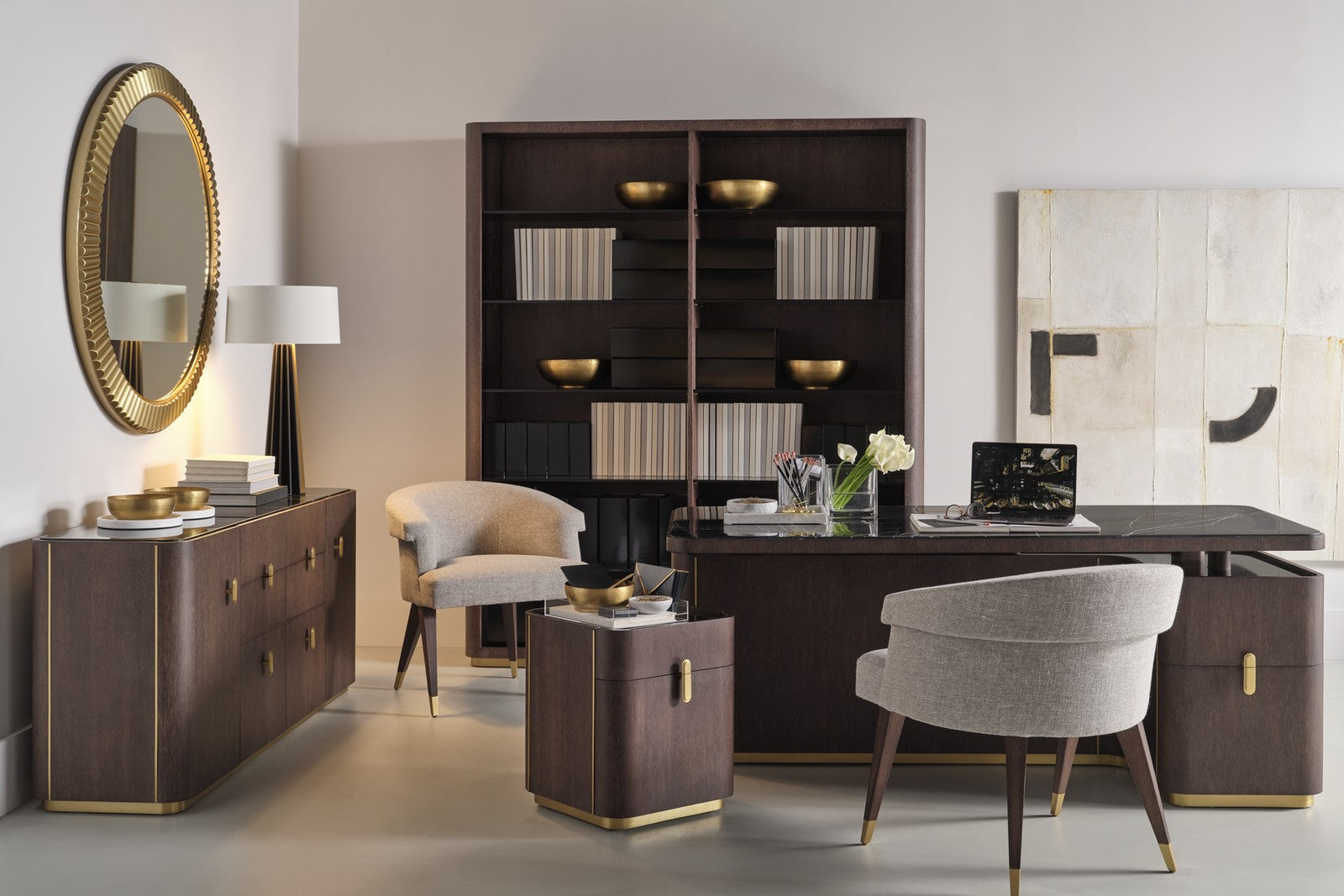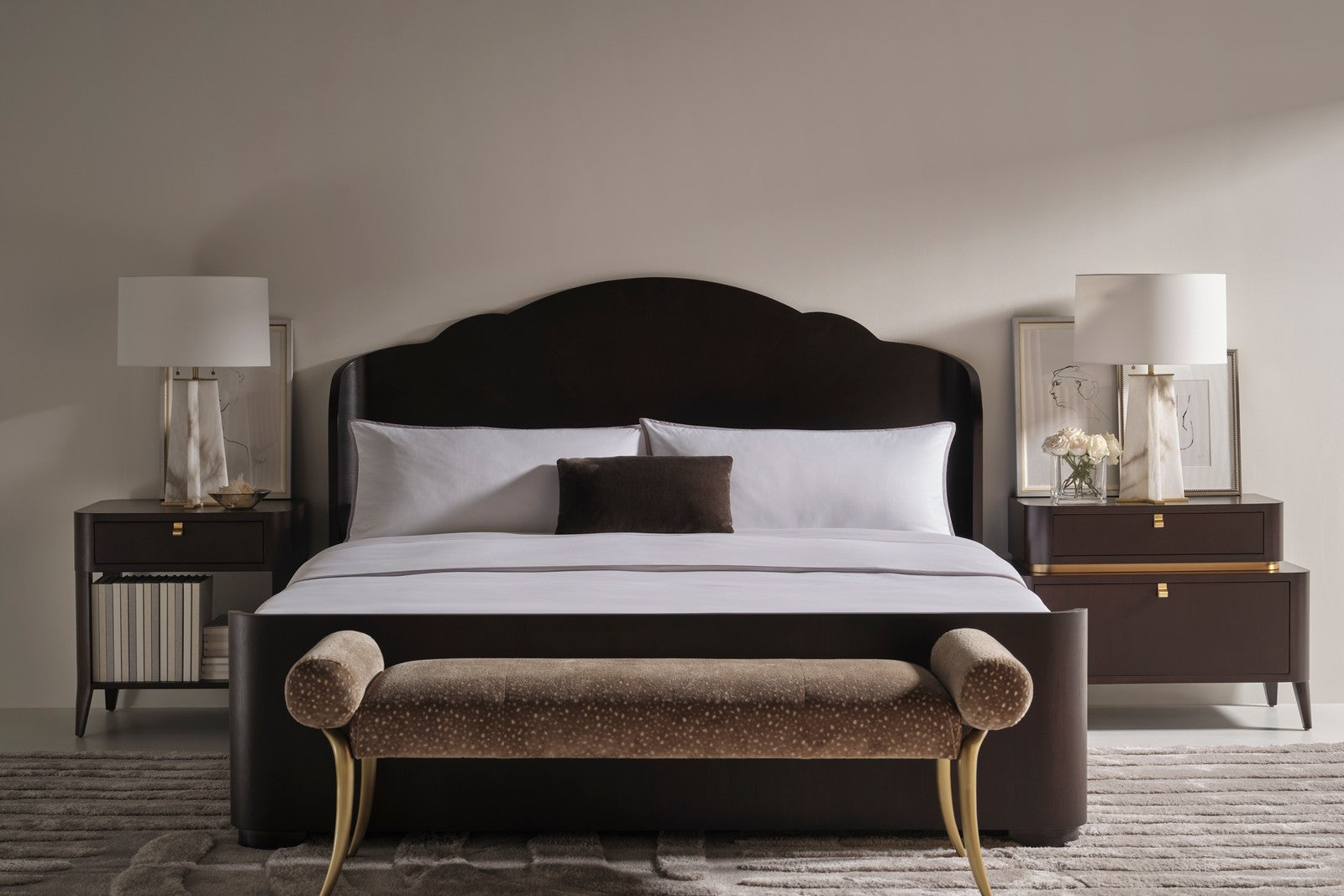
Theodore Alexander and Stephen Church: English Furniture Making Today
The Stephen Church Collection by Theodore Alexander is a line of traditional English furniture designed and made by Stephen Church, a Master Cabinetmaker working in the tradition of Adam, Chippendale, Hepplewhite, and Sheraton. Sutter & Vale carries the full range. Every surface, including undersides, backs, and drawer box interiors, is prepared, sanded, and finished by hand.
Who Is Stephen Church, and What Is His Background?
Stephen Church is a Master Cabinetmaker who trained in antique furniture restoration before opening his own workshop in the late 1970s. His path from restorer to designer is direct. He began by making copies of fine antique English pieces, developed that into an original design practice rooted in 18th and 19th century forms, and built a reputation as one of the best in the UK. Theodore Alexander approached him to design and produce an exclusive range of traditional English furniture. In his own words: "Our intention was to produce the finest products that were available in the marketplace at the time. 12 years on, I believe we achieved that goal."
His title, as it appears in Theodore Alexander's own material, is "Stephen Church, English Furniture Maker." That distinction matters. He is not an outside stylist lending a name to a line. He designs the pieces and oversees the craft behind them.
What Techniques Define the Stephen Church Collection?
Every process is executed by hand, from a carved chair leg to a table finish or an inlay. The techniques are those of classical English cabinetmaking, practiced in full rather than abbreviated.
Key techniques used across the collection:
- Parquetry banding and crossbanding
- Marquetry and ebonized double stringing
- Brass line inlay, fan inlay, and flowerhead inlay
- Acanthus-carved cabriole legs
- Cast brass capitals and cappings
- Reeded and fluted columns
The woods and veneers are chosen for figure and warmth: flame mahogany, swirl walnut, satinwood, walnut burl, yew, Primavera, Etimoe, Movingue, Cerejeira, Morado, and sycamore. Ebonized surfaces appear as contrast elements and on stringing details. This is not a short list of materials applied to a short list of forms. The variety reflects the breadth of the English tradition the collection draws from.
What Finishes Are Available, and How Do They Differ?
The Stephen Church Collection offers four named finishes: Oxford, Walcot, Patrician, and Old English. Old English is a brass finish applied to hardware and decorative elements rather than to wood surfaces. The three wood finishes, Oxford, Walcot, and Patrician, each interpret the warm tones of mahogany and walnut differently.
When choosing between them, look at the dominant wood in the piece you are considering. Flame mahogany reads differently under a darker finish than a lighter one, and figuring in swirl walnut shifts visibly with finish depth. If you have existing pieces in the room, pull a finish swatch before you commit.
Which Pieces Best Illustrate the Collection's Range?
Two pieces show how far the range extends in scale and purpose.
The Aleron Side Table pairs figured sycamore veneer with khaya wood and brass detailing. Its surface work, the contrast of the sycamore's soft luminous grain against brass line inlay, shows the collection's approach to ornament: specific, controlled, and rooted in period precedent.
The Admiralty Accent Table layers khaya, oak, okoumé, and morado veneers whose varied tones and figuring give the surface a depth that comes from hand-selected materials worked in the classical way. At sixteen inches, it reads as an accent piece; the layered veneer work gives it the presence of something much larger.
The full collection, browsable through the Theodore Alexander range at Sutter & Vale, covers 41 pieces across occasional tables, case pieces, and seating. Measure your space before you choose, and note the finish on existing pieces in the room.
Frequently Asked Questions
Is every surface of a Stephen Church piece finished, or only the visible ones?
Every surface is prepared, sanded, and finished, including the undersides, the backs, and the interior of drawer boxes. The stated standard is that a piece can be viewed from any side. That level of finish is consistent with classical English cabinetmaking practice, where a piece was expected to stand away from a wall.
How does the Stephen Church Collection differ from Theodore Alexander's other traditional lines?
The Stephen Church Collection is distinguished by its focus on English 18th and 19th century forms and by the range of inlay techniques it employs. Other Theodore Alexander collections work in different periods and idioms. If crossbanding, brass line inlay, and flame mahogany are what you are looking for, this collection is the most concentrated source of them in the range.
Can I place a Stephen Church piece alongside contemporary furniture?
Yes. The collection's figuring, inlay work, and warm wood tones contrast well with cleaner-lined contemporary pieces. The key is to let one vocabulary lead and the other support. A single Stephen Church accent table alongside a more restrained sofa or dining table tends to read as deliberate rather than inconsistent.
The Sutter & Vale Team