The 2-Minute Rug Size Test That Never Fails
The right rug size comes down to one rule: every key piece of furniture in a seating or dining group should share the rug, or at least touch it. Sutter & Vale applies this test across every room when advising on Global Views living interiors, and it works whether you are furnishing a compact apartment or a generous open-plan space. Two minutes with a tape measure is all it takes.
What Is the 2-Minute Rug Size Test?
Place painter's tape on your floor in the rug dimensions you are considering, set your furniture roughly where it will live, then check three things. First, do the front legs of every sofa and chair land on the tape? Second, does the tape edge sit at least 18 inches from every wall? Third, does the shape feel proportional to the room, or does it read too narrow or too square? If all three pass, the size is right. If any one fails, adjust before you order.
What Size Rug Works in a Living Room?
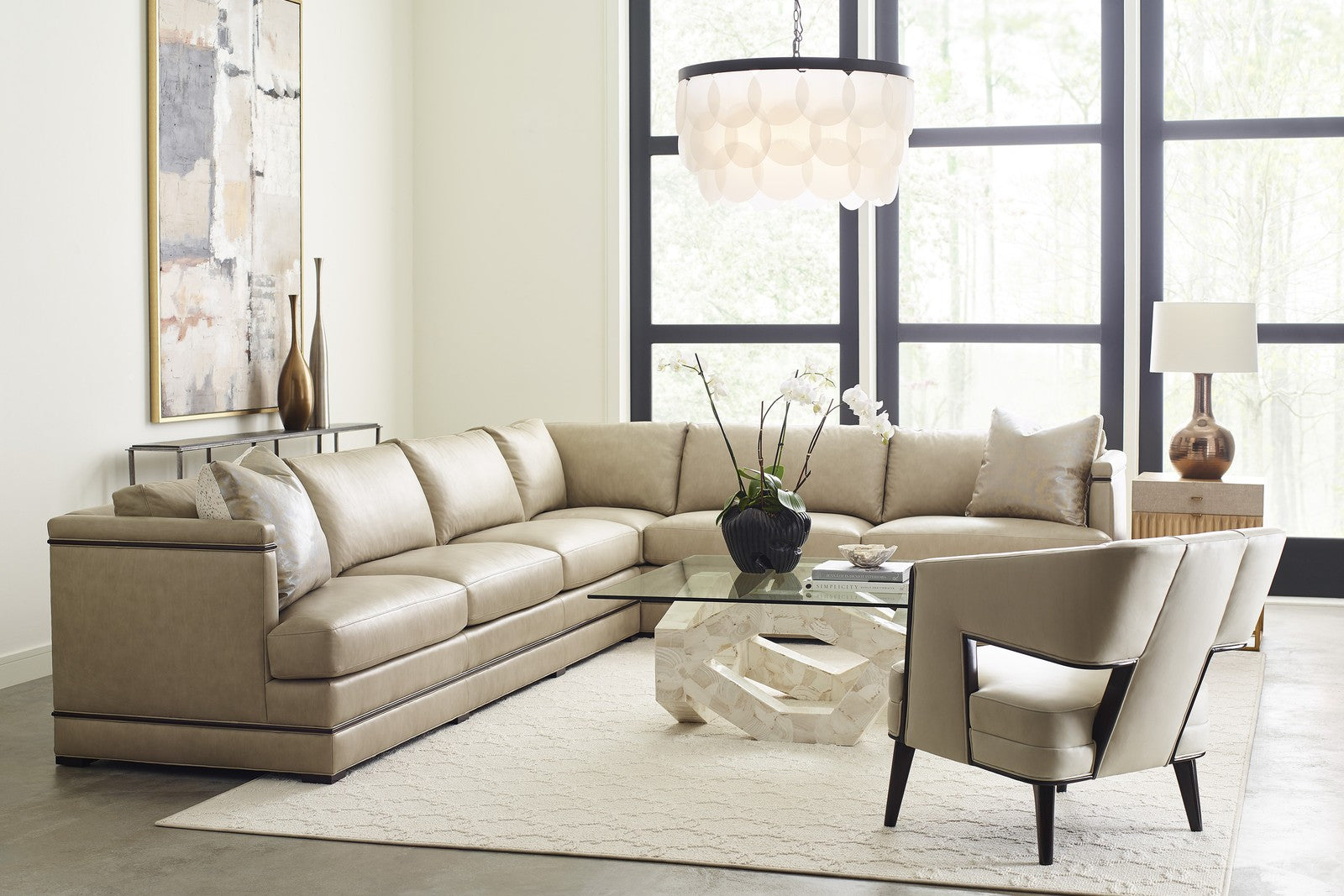
In a living room, the front legs of every sofa and chair should rest on the rug. That single sentence handles most sizing decisions.
A rug that floats in the center with no furniture touching it reads as an afterthought. One that pulls everything onto it unifies the group. Leave 18 to 24 inches of bare floor between the rug edge and the wall. Less than that and the room feels crowded. More than 36 inches and the rug reads too small.
Practical starting points by room width:
| Room width | Minimum rug size |
|---|---|
| Up to 12 feet | 8 x 10 feet |
| 12 to 15 feet | 9 x 12 feet |
| 15 feet and wider | 10 x 14 feet or larger |
A piece like the Carlyle Cocktail Table helps you read scale quickly once the tape is down. Its glass inset top keeps sightlines open to the floor beneath, so you can judge the rug proportion without visual interference.
What Size Rug Belongs Under a Dining Table?
The rug must extend at least 24 inches beyond each side of the table, so chairs stay on the rug even when pulled out. That is the non-negotiable number.
A standard 36-inch round table needs a rug no smaller than 7 feet in diameter. A 72-inch rectangular table needs at least a 9 x 12 feet rug. When in doubt, go one size up. A slightly generous rug in a dining room always reads better than one that traps chair legs at the edge.
How Do You Size a Rug for a Bedroom?
The most reliable bedroom placement puts the rug under the lower two-thirds of the bed, so 18 to 24 inches extend on each side and at the foot.
For common bed sizes:
- Twin or Full: a 5 x 8 feet rug centered under and around the bed
- Queen: an 8 x 10 feet rug; 18 inches on each side is comfortable
- King: a 9 x 12 feet rug; this gives full coverage and room for bedside tables to sit on or just off the edge
If you want nightstands fully on the rug, go one size up. If the room is narrow and the rug would crowd the walls, a runner on each side of the bed is a practical alternative.
Frequently Asked Questions
Can a rug be too large for a room?
Yes. When the rug edge comes within 12 inches or less of the baseboard on multiple sides, the room loses the grounding effect a rug is meant to provide. Aim for at least 18 inches of exposed floor on every side.
Should a rug pad change how I size a rug?
A rug pad should match the rug size or sit one inch inside on each edge. It does not affect the sizing decision itself, but it does affect how the rug lies and how long it lasts, so always use one on hard floors.
What if my room is an unusual shape or open plan?
Define the zone you are rugging, not the whole room. In an open-plan space, each functional area, seating, dining, a reading corner, gets its own rug sized to that group alone. The rugs do not need to match, but they should share a tonal relationship so the overall floor reads as intentional.
The Sutter & Vale Team