How to Build a Cinematic Dining Room for Winter Entertaining
Theodore Alexander's dining collection, available through Sutter & Vale, gives you the raw material to build a room that holds candlelight and conversation through a long winter evening. Table shape, chair weight, and layered light are the three decisions that determine whether the result feels cinematic or simply cold.
What Kind of Table Works Best for Winter Entertaining?
Round tables suit intimate winter dinners best. Every seat faces the center, and conversation moves without effort. At sixty inches across, the Kesden Round Dining Table delivers a marble surface with brass articulation that catches candlelight from every angle. Marble holds visual weight without visual clutter, which matters when you are working against the short, grey days of February.
If your guest count varies, a rectangular extension table earns its place. The Kesden Extension Dining Table spans 128 inches at full extension, its Tamo Ash Burl veneer drawing the eye down the length of the table the way a long candlelit runner would.
| Room width | Table shape | Suggested size |
|---|---|---|
| Under 12 feet | Round | 48 to 60 inches diameter |
| 12 to 14 feet | Round or square | 60 inches |
| Over 14 feet | Rectangular | 84 inches and up |
Allow at least 36 inches between the table edge and the wall on every side so chairs pull back without crowding.
Which Chairs Create the Right Weight for a Winter Table?
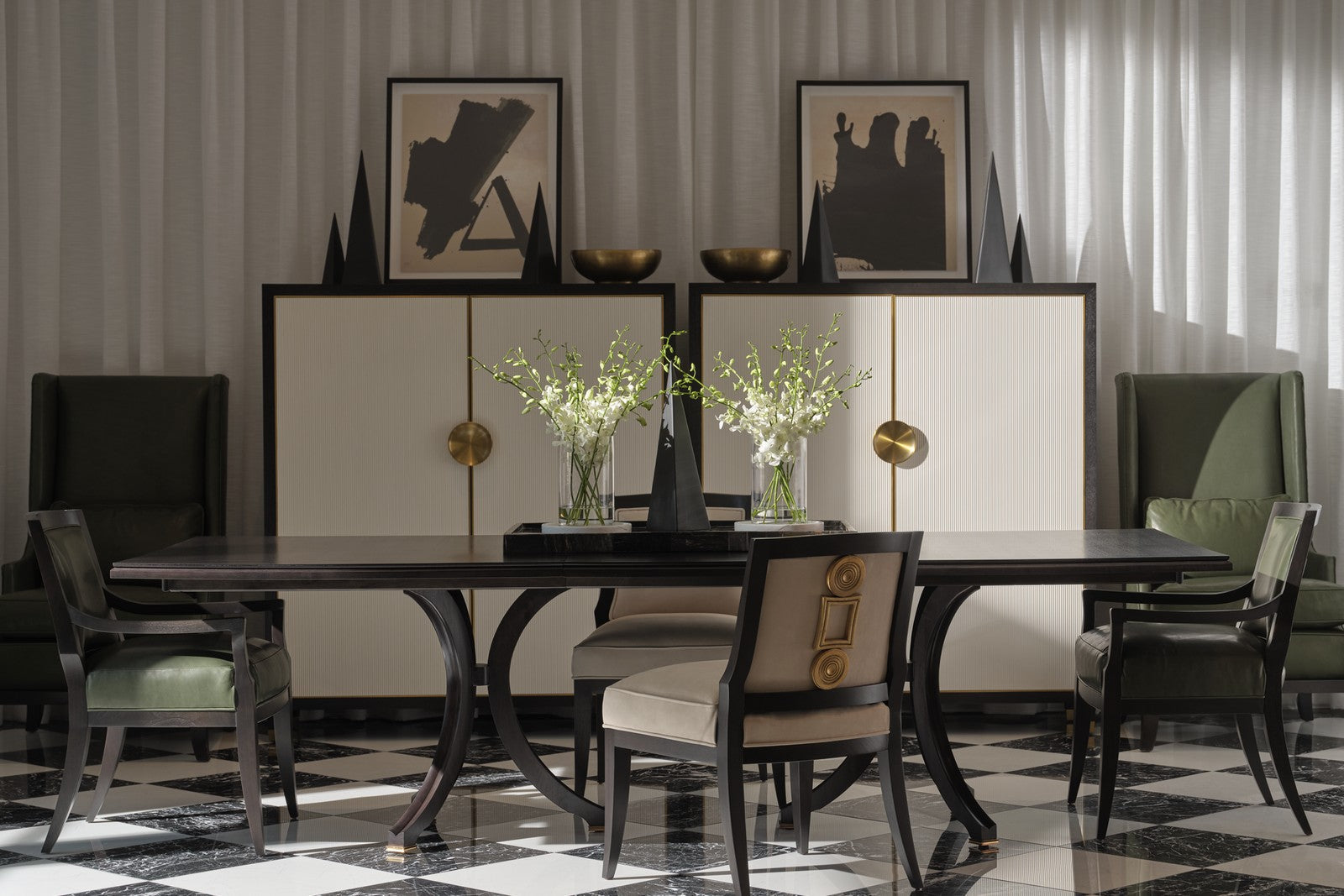
Winter dining rooms benefit from chairs with architectural presence. In the low light of January or February, a substantial chair holds the composition together in a way a lighter one cannot.
The Kesden Dining Armchair is built in beech wood with broad arms and an upright posture that still accommodates long evenings. Pair it with the Kesden Dining Side Chair, just under twenty-two inches wide, to seat more guests without crowding the table. Two armchairs at the heads and side chairs along the flanks is a classic arrangement that scales from six to eight covers cleanly.
A few practical notes:
- Upholstered seats in darker fabrics absorb light and add warmth in winter rooms
- Wood-frame chairs without upholstery read more formal; reserve them for rooms with other soft surfaces
- Armchairs add roughly two to three inches per side, so account for that in your place settings
How Do You Layer Lighting for a Cinematic Effect?
One overhead fixture cannot do the work alone. The cinematic quality of a winter dining room comes from three sources: ambient, task, and accent.
Ambient light comes from the fixture above the table. Position a chandelier so its bottom edge hangs 30 to 36 inches above the tabletop in a room with standard 8-foot ceilings. Raise that number by 3 inches for every additional foot of ceiling height.
Task light at the table means candles. A long rectangular table benefits from a runner of pillar candles at varying heights. A round table is best served by a low central arrangement that does not block sightlines.
Accent lighting, wall sconces or a picture light over a sideboard, fills the corners and prevents the room from going dark at its edges. That perimeter warmth makes the room feel enclosed and intentional on a winter night. Dimmer controls on every circuit let you shift the room from a dinner party at 7 PM to an after-dinner mood at 10 PM.
How Do You Pull the Full Room Together?
The Theodore Alexander dining collection works because its pieces share a material logic. Brass, dark veneers, and classical proportions appear across tables and chairs in enough variation to let you mix without the room feeling assembled from a single catalog page.
A useful sequence for planning:
- Fix the table first. Shape and finish determine everything else.
- Choose chairs that share at least one material detail with the table: a wood tone, a metal accent, or a finish depth.
- Add a sideboard or buffet to give candlelight something to reflect from across the room.
- Introduce textiles last. A rug underfoot and curtains at the windows absorb sound and add softness that hard surfaces cannot provide.
Frequently Asked Questions
How many chairs fit around a 60-inch round table?
A sixty-inch round table seats six comfortably and can accommodate eight with place settings of about 22 inches per cover. Allow each diner at least 24 inches of elbow room for a relaxed dinner party.
What finish works best in a room with limited natural light?
Darker veneers with warm undertones, such as the Pyramid Brown finish on the Kesden tables, absorb and reflect artificial light in a way that reads as richness rather than heaviness. Avoid very pale finishes in north-facing or windowless rooms, where they can look flat.
Can you mix dining chair styles at one table?
Yes. Running armchairs at the heads and side chairs along the flanks is standard practice and adds visual rhythm. The most coherent results come when the chairs share a wood species or finish, even if their silhouettes differ.
The Sutter & Vale Team