Modern History: Classical European Forms, Reinterpreted
Modern History takes classical European silhouettes and strips them back. Traditional proportions stay intact, but ornamentation is simplified and finishes are brought forward in time, so each piece carries its lineage without tipping into period-room territory. Sutter & Vale carries the full range of Modern History casegoods, and they are among the most reliable choices for transitional interiors that need to hold a classic and a modern impulse in the same sightline.
What Is Modern History Furniture, and What Makes It Distinct?
The house starts with classical European forms and removes what is not necessary. Recognized silhouettes remain, but surface carving is reduced, profiles are flatter, and finishes read current rather than costumed. The result is furniture that communicates heritage without announcing it. That balance is why the line works so consistently in transitional rooms, where one sightline might include a contemporary sofa and a traditional architectural molding at the same time.
What Finishes and Materials Define the Line?
Wood, veneer and paint are the three main languages, and Modern History uses all three with specificity.
- Walnut burl veneer appears across several pieces, book-matched so the grain becomes its own surface pattern. The Walnut Burl Dresser is the clearest example: a long, low silhouette with rippling smoke-toned grain and antique brass hardware that keeps the composition grounded.
- Antique painted finishes give other pieces a patinated, layered quality. The Vallieu Commode wears a weathered antique painted surface that reads like age without looking worn out, while antique brass hardware adds the right degree of formality.
- Chalky white and antique white surfaces bring a softer classical reference. The Copenhagen Bedside Chest in Antique White uses reeded drawer fronts to catch light in a vertical rhythm, a detail that nods directly to classical column fluting.
Hardware is consistently brass across the line, shifting from polished to antique to burnished depending on the finish of the case. That consistency is what lets you mix pieces across a room without them working against each other.
How Do Modern History Casegoods Work in a Transitional Interior?
A transitional interior asks a piece to function as a bridge: it must satisfy a classically trained eye without making a modern room feel like a restoration project. Modern History casegoods do this through proportion rather than ornament. The cases are generous in scale, which gives them architectural weight, but the surface detail is controlled enough that they sit beside contemporary upholstery or lighting without friction.
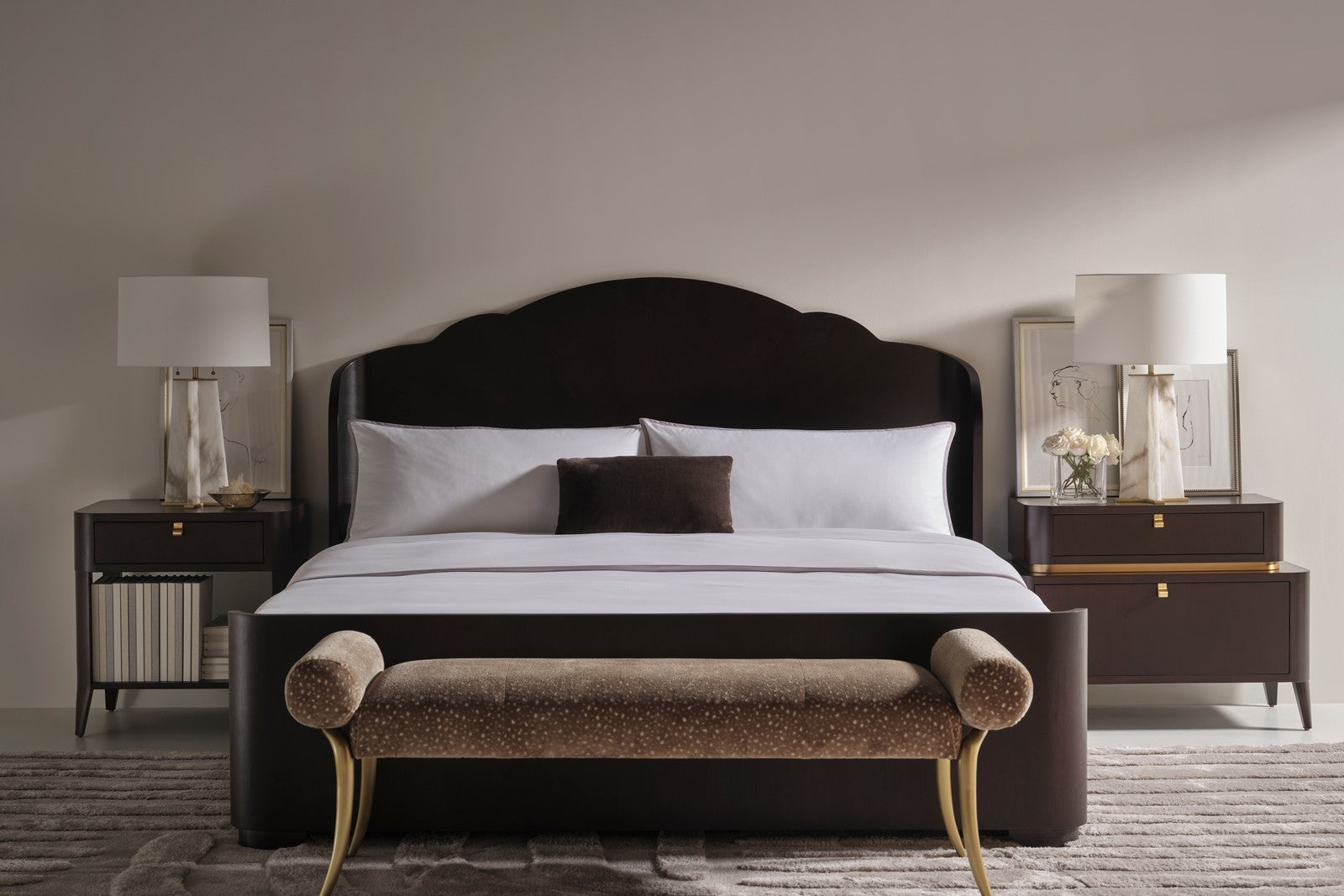
The Villeneuve Dresser is a useful example. Walnut veneer surfaces read long and lean, brass hardware traces clean lines across the facade, and the overall silhouette has the discipline of classical case furniture with none of its heaviness. Pair it with a linen upholstered bed and unlacquered brass sconces and it holds its position without pulling the room backward in time.
At the bedside, the Villeneuve Bedside Chest carries the same vocabulary at a smaller scale: walnut veneer casework, an oak drawer box built for lasting function, and brass hardware that reads as architectural detail rather than period reproduction.
How Do You Choose Between the Painted and the Wood-Finish Pieces?
Start with the light in the room.
| Condition | Consider |
|---|---|
| Warm, south- or west-facing light | Walnut burl or antique brass-dominant pieces; the grain reads richer |
| Cool, north- or east-facing light | Antique white or chalky painted finishes; they reflect light rather than absorb it |
| Mixed light or open-plan spaces | Painted pieces in neutral tones anchor without competing across distances |
You can also mix. A painted bedside chest alongside a walnut dresser is a well-established approach in classical European interiors, and the shared brass hardware across the Modern History collection makes that combination coherent rather than accidental.
Frequently Asked Questions
Are Modern History pieces scaled generously enough for larger rooms?
The casegoods are proportioned to read as furniture rather than accessories, which means they hold their ground in rooms with high ceilings or wide wall spans. Confirm the exact dimensions of any piece against your wall space before ordering.
Can I use Modern History casegoods in rooms other than bedrooms?
Certain pieces, particularly the commodes and dressers, work well as entry hall anchors or dining room storage. Their scaled proportions and architectural finishes support that kind of use without adaptation.
Does the brass hardware coordinate across different Modern History finishes?
The house uses brass consistently across its range, shifting the tone from polished to antique to burnished to suit each finish. Pieces chosen from the same line share enough hardware language to sit together in a room without looking mismatched.
The Sutter & Vale Team