How to Choose a Desk for a Home Office
Choosing a home office desk comes down to three things: how much surface you use, how much floor space you can give up, and how much storage the room needs to absorb. Hooker Furnishings, available at Sutter & Vale, makes desks across traditional and transitional styles with enough variation to answer most of those combinations from a single house.
What size desk do you actually need for a home office?
Surface width sets your working comfort. A 48-inch-wide desk covers a laptop, a notepad, and a lamp with room to spare. Sixty inches is the threshold where a second monitor or a spread of drawings becomes comfortable. For large-format materials, 66 to 72 inches gives you a full spread without stacking.
Depth matters as much as width. Standard desk depth runs 24 to 30 inches. Go shallower and a monitor sits too close. Go deeper and your arms strain to reach the keyboard.
How do you know a desk has enough storage?
Count what you need to keep off the surface: files, cables, pens, reference books. Then match that list to drawer count and type.
- File drawers accept letter or legal folders and are the hardest storage to replicate elsewhere in a room.
- Utility drawers handle supplies; two or three is enough for most users.
- A keyboard tray or drop-front drawer keeps the surface clear when you step away.
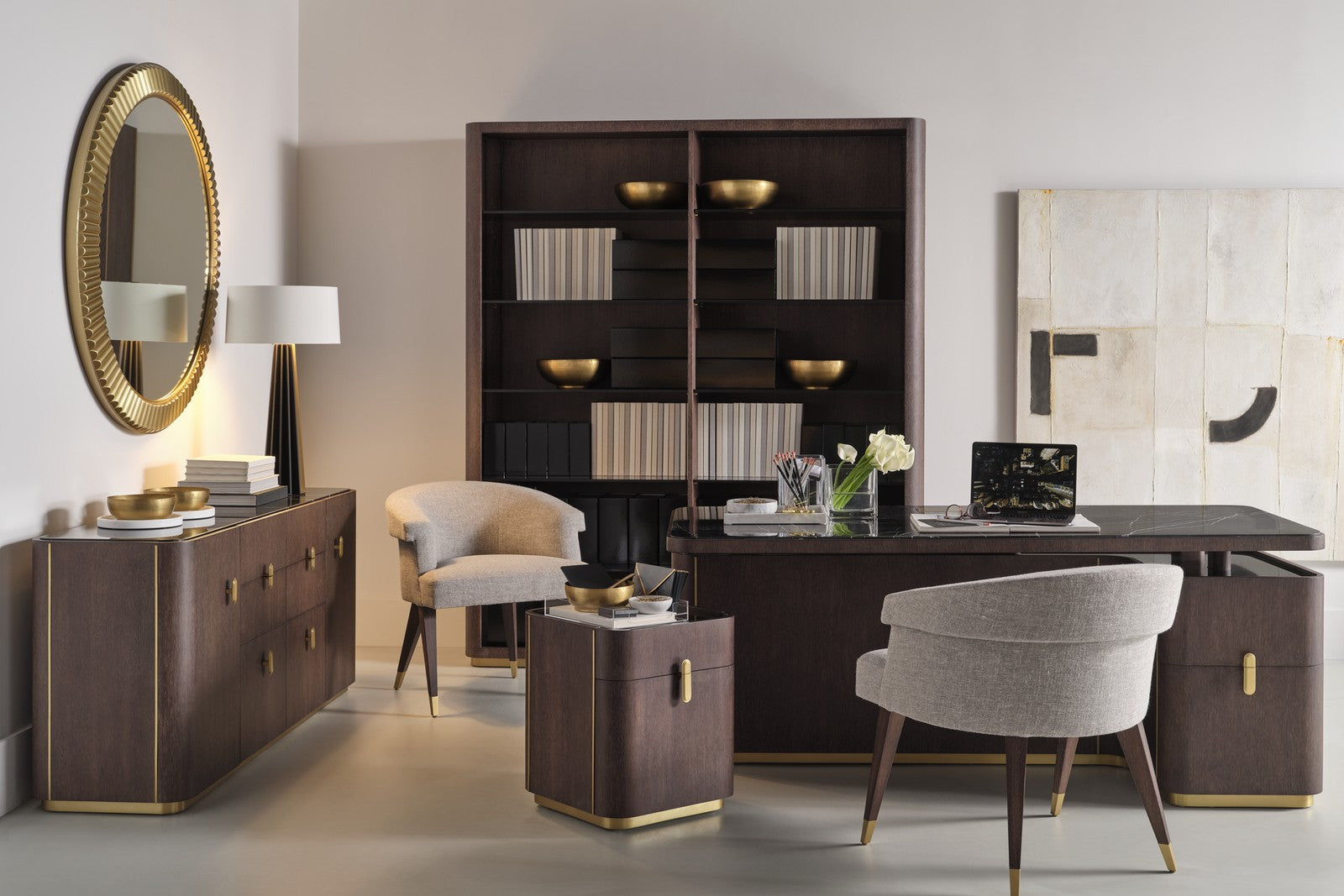
The Cherry Knee-Hole Desk, Bow Front from Hooker Furnishings illustrates the full range: seven drawers on steel ball-bearing slides, two of which take letter and legal folders, a drop-front center drawer, and a keyboard opening at 20 inches wide by 15.5 inches deep. That is a complete working setup in one piece.
Does the desk style need to match the rest of the room?
It does not need to match exactly, but it should share a finish family or a wood tone. Hooker Furnishings builds across traditional, transitional, and modern categories, so you can pull a piece from their desks collection and still find side tables, console tables, and accent chairs in the same house that read as a coordinated room without being a matched set.
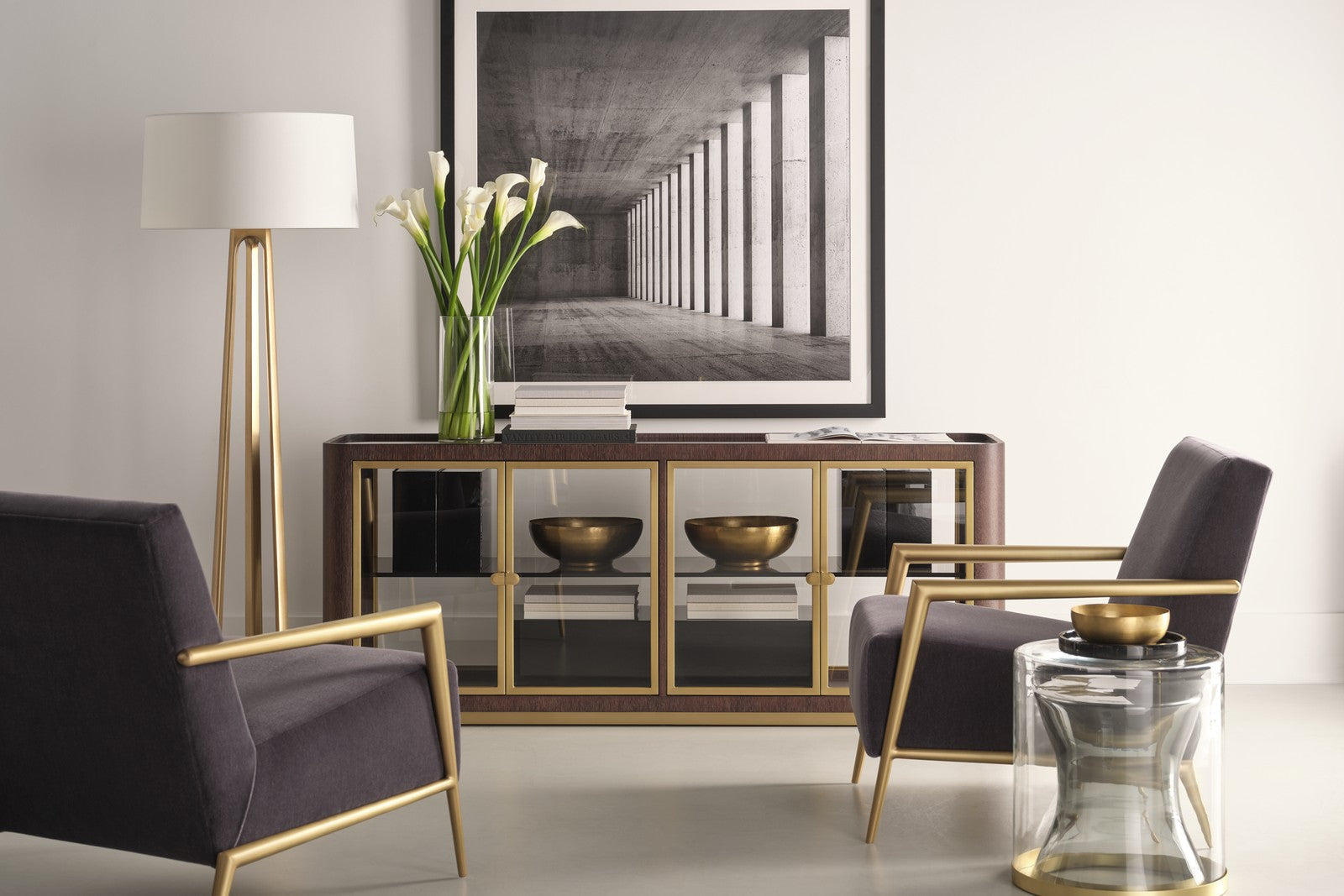
If your office doubles as a sitting room or library, consider what else the space needs. A console behind a sofa, a side table beside a reading chair, the desk itself: Hooker answers all three categories.
What finish holds up in a working environment?
Hard finishes wear better on a daily-use surface. A bonded leather top, like the one on the Cherry Knee-Hole Desk, resists pen marks and wipes down without much effort. Wood tops in a medium or darker finish hide minor wear better than pale or painted surfaces. Distressed finishes, such as the medium clear cherry on pieces in the Brookhaven line, absorb the small marks of daily life without showing them.
Frequently Asked Questions
What is a standard desk height?
Most desks sit between 28 and 30 inches high. If you are significantly taller or shorter than average, confirm the height before ordering, because most fixed-height desks cannot be adjusted after manufacture.
Can a knee-hole desk work without a dedicated office chair?
Yes. A knee-hole opening gives clearance for a standard task chair. Confirm the knee-hole height, usually listed on the product page, against the seat height of the chair you plan to use.
How do I choose between a writing desk and a desk with drawers?
A writing desk suits a secondary workspace or a light daily user. If the desk is your primary work surface and you need files accessible, choose a piece with at least one file drawer. It removes the need for a separate filing cabinet and keeps the room cleaner.
The Sutter & Vale Team