What Is Quiet Luxury? The Furniture Houses That Defined It Before It Had a Name
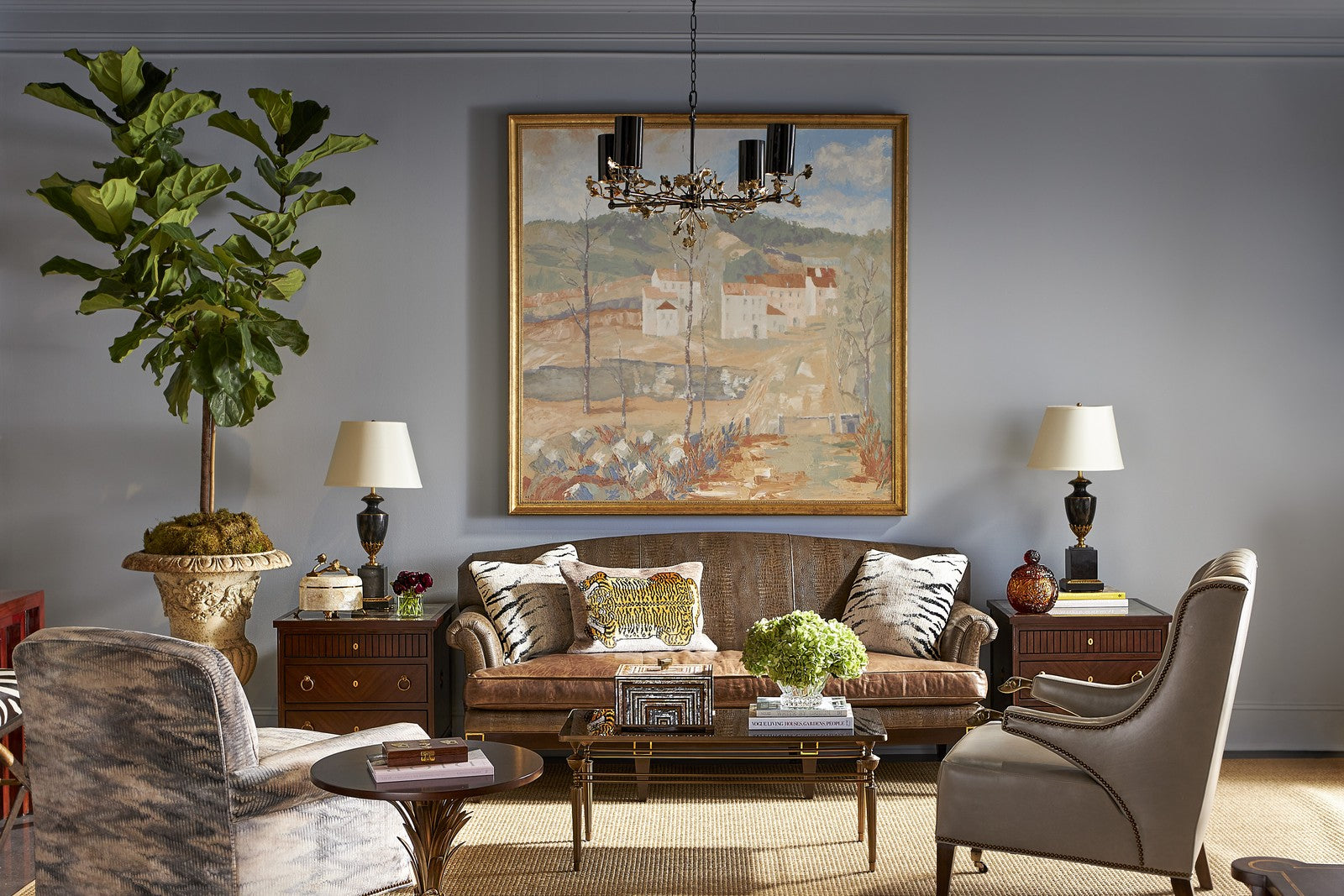
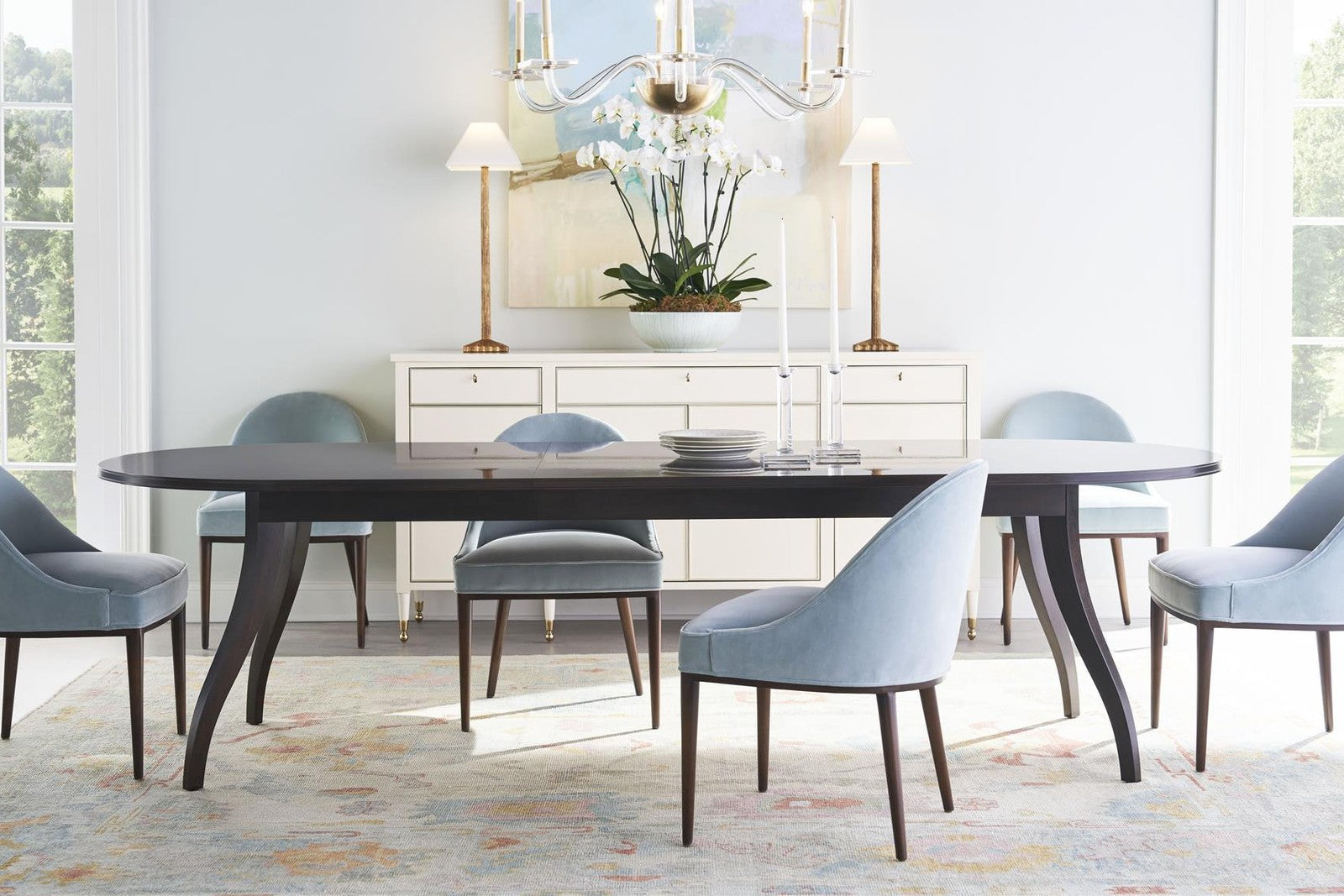
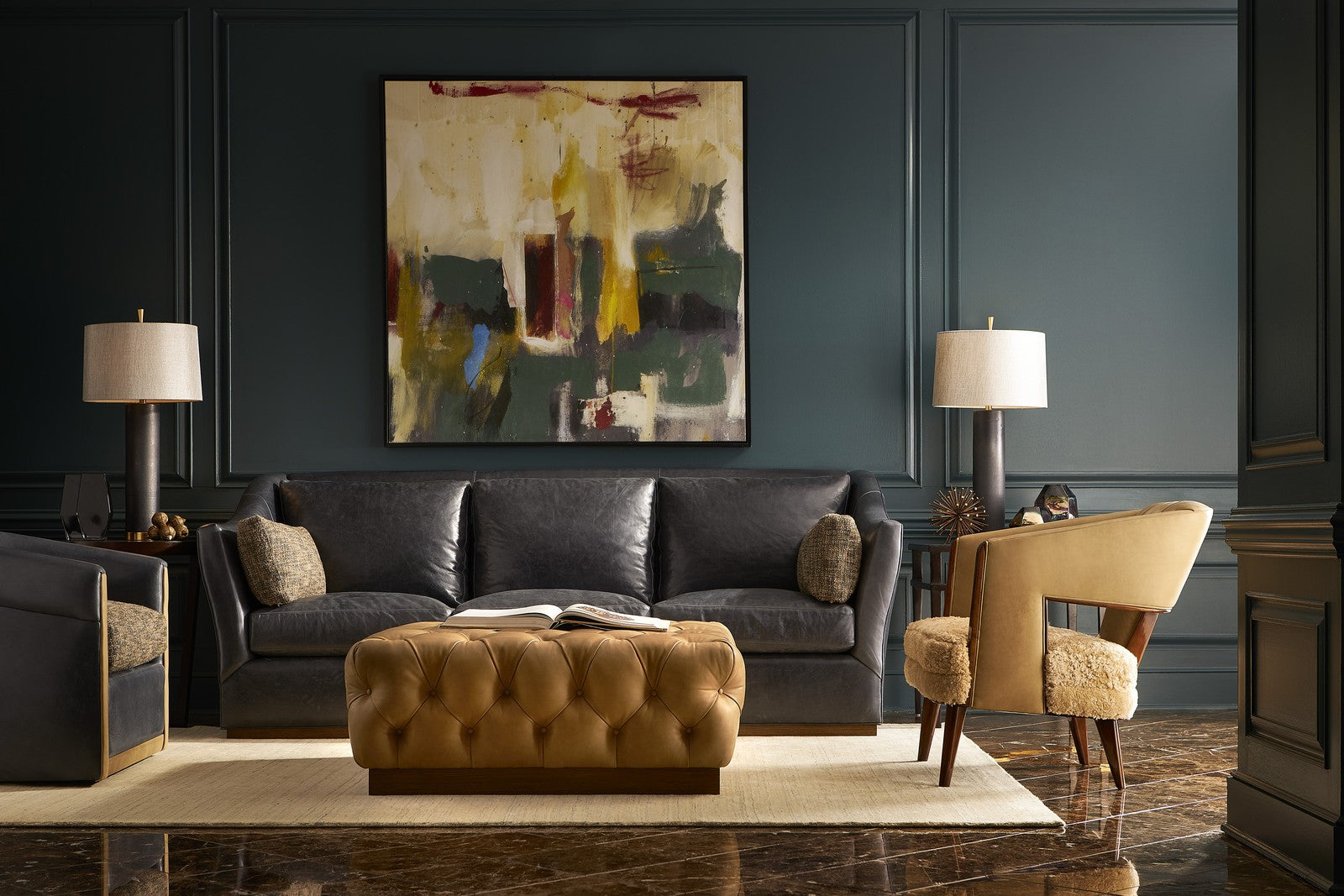
Quiet luxury in furniture means proportion, material and making over logos and status signals. Baker Furniture, Hickory Chair and Theodore Alexander, all available through Sutter & Vale, defined this way of working long before the phrase had a name. Each house reached the same conclusion by a different route, and the results hold up across decades.
What separates quiet luxury from plain minimalism?
Quiet luxury is specific, not spare. Minimalism can be cold and unresolved. Quiet luxury is warm, considered and full of detail you notice only after living with a piece for a while.
The distinction shows clearly in the wood. Baker's Thomas Pheasant collection uses wirebrushed quartered oak veneer, a process that draws the grain forward so the surface reads like a topographic map. The Gem Night Table pairs that texture with an Obsidian and Bronzino finish. Nothing announces itself. The material does all the speaking.
How does making quality show up in everyday furniture?
It shows in things you feel before you see them: drawer weight, the give of an upholstered arm, the way a finish holds light differently at noon and at dusk.
Hickory Chair still makes each piece in a quantity of one. That phrase describes a production model in which a sofa or chair is built for a specific order, not pulled from a warehouse. The result is a piece that fits the room it was made for and carries the slight human variation that mass production cannot replicate.
Baker's Barbara Barry collection approaches the same idea through material pairing. The Platform Night Table combines a rattan frame with quartered oak surfaces finished in Straw with Warm Bronze. Rattan and oak have been used for centuries. The discipline is in how they are held together, through proportion and finish rather than novelty.
Which materials define the quiet luxury register?
A short list of materials that appear consistently across Baker, Hickory Chair and Theodore Alexander:
- Quartered oak veneer, wirebrushed or plain, for its cathedral grain and structural figure
- Honed stone tops, including Lena Grey marble and natural onyx, for cool mineral permanence
- Rattan, woven in square mesh or pencil form, for warmth and craft history
- Hand-forged and hand-burnished hardware in bronze, brass or blackened steel
- Lacquered finishes in deep, saturated tones such as Obsidian, Carob and deep sable
Theodore Alexander draws on a London antiques dealer's original eye. Lost wax cast metal mounts, hand-tooled leather and flame veneered surfaces are working methods with centuries of precedent. The house uses them not to signal age but because the results are better than their shortcuts.
How do you choose between these three houses for a specific room?
The choice usually comes down to visual weight and dominant character.
| House | Dominant character | Where it works best |
|---|---|---|
| Baker Furniture | Architectural, resolved geometry | Primary bedroom, formal living, study |
| Hickory Chair | Upholstered warmth, built to order | Living room, library, sitting room |
| Theodore Alexander | Collected, antique-referencing detail | Dining room, entry, accent pieces |
Baker suits rooms where you want furniture to read as architecture. Hickory Chair suits rooms built around seating and the long afternoon. Theodore Alexander suits rooms that reward close attention, where a drawer pull or a veneer pattern becomes part of daily life.
All three houses are represented in the Sutter & Vale brand collection, where you can compare ranges side by side.
Frequently Asked Questions
Is quiet luxury furniture always neutral in color?
Not necessarily. The register favors depth over brightness: deep sable, Carob, Obsidian, Bronzino. These are specific, saturated tones, not generic greiges. Color serves the material rather than overwhelming it.
Does quiet luxury furniture work in smaller rooms?
It works well in smaller rooms because the design logic depends on proportion rather than scale. A piece like the Malia Bedside Table, in quartered oak veneer, brings the same material seriousness to a compact space that a larger case piece brings to a grander one.
How do I know if a piece is genuinely well made versus just expensive?
Look at the secondary surfaces: the inside of a drawer, the back of a cabinet, the underside of a table. Houses that care about making finish these surfaces with the same attention as the fronts. Cast rather than stamped hardware, joinery that fits without filler, and wood that has been sanded through multiple passes before finishing are reliable indicators of genuine craft.
The Sutter & Vale Team