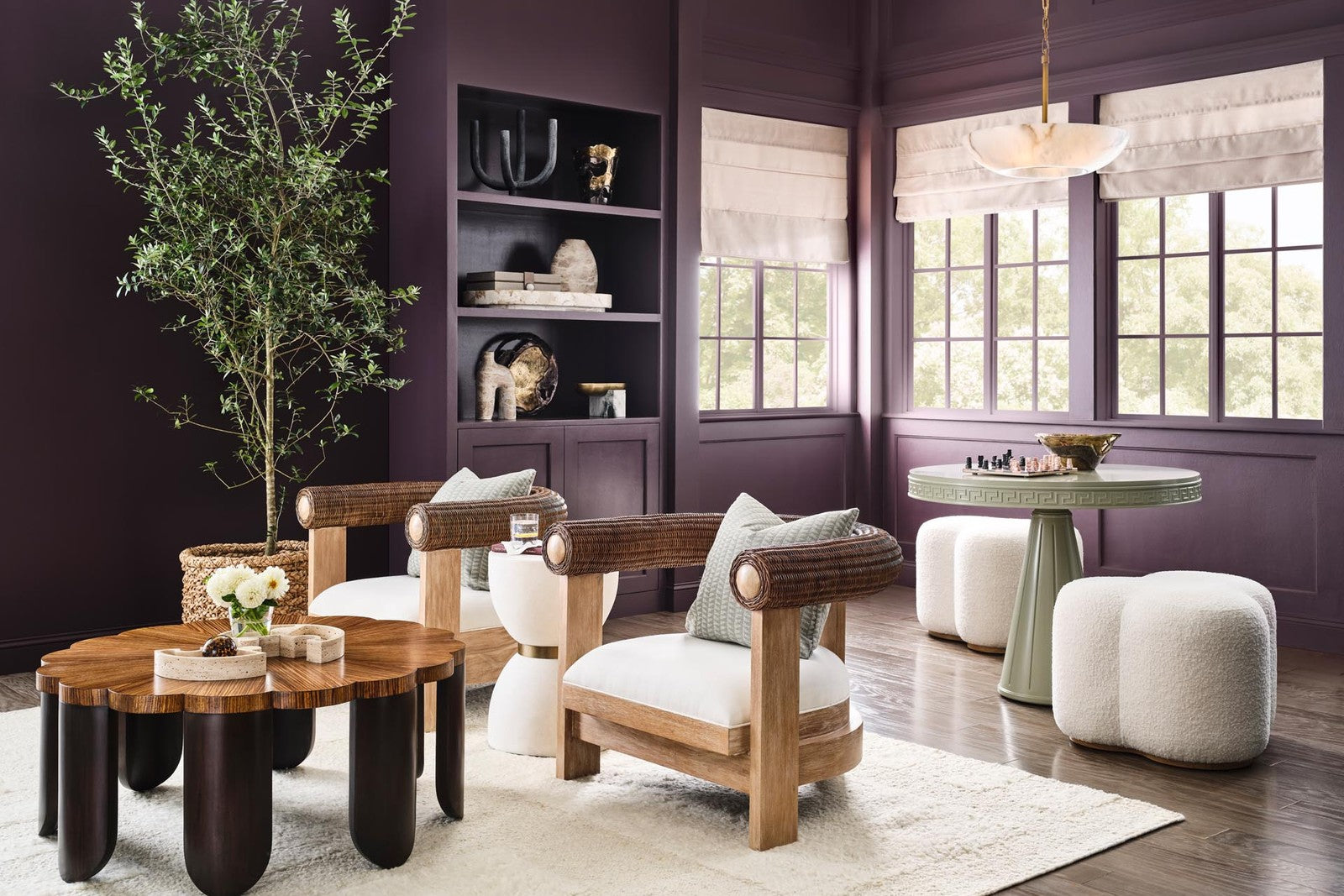
Theodore Alexander Occasional Tables: Where the Craft Shows Up Close
Theodore Alexander occasional tables reward close attention. The craft that defines the house shows most clearly at small scale: veneers chosen for figure, inlay cut and fitted by hand, and carving with enough detail to hold the eye at arm's length. At Sutter & Vale, the Theodore Alexander collection includes side, end, and cocktail tables where the making is the point.
What Craft Techniques Actually Appear on These Tables?
The techniques are specific and applied by hand. Theodore Alexander's own catalog states that every process and every detail, from a carved chair leg to a table finish or inlay, is executed by hand. On occasional tables that means crossbanding, parquetry banding, ebonized and double stringing, brass line inlay, and marquetry work, alongside cast brass cappings and hardware finished to a jewelry standard. The factory record also documents mother-of-pearl inlay and Greek key banding in contrasting woods.
The finish work goes further than most buyers expect. All surfaces are prepared, sanded, and finished, including undersides, backs, and the insides of drawer boxes. A table can be viewed from any side.
Which Veneers and Woods Do These Tables Use?
The range is wide, and the veneer choice changes the register of a piece substantially.
- Flame mahogany: high contrast, pronounced figuring, formal character
- Swirl walnut and walnut burl: quieter movement, warmer tone
- Fumed figured eucalyptus: smoky atmospheric grain that shifts with light
- Paldao veneer: strong grain, pairs well with brass
- Pine veneer: coastal and transitional contexts, reads lighter
- Khaya, okoume, and morado: heritage English character, seen in Althorp pieces
- Satinwood, Primavera, Cerejeira, Etimoe, Movingue: period-appropriate options in the Stephen Church tradition
The Camille Side Table uses fumed figured eucalyptus veneer on a composite construction that holds a precise architectural line. The Capital Cocktail Table uses flame figured veneer with brass detailing, a surface that shifts visibly as light moves across it.
How Do You Match a Table to the Room It Will Live In?
Proportion and material register are the two variables worth resolving first.
| Setting | Surface to consider | Hardware or detail |
|---|---|---|
| Traditional or period room | Flame mahogany, yew, satinwood | Cast brass, ebonized stringing |
| Transitional living room | Paldao, walnut burl, pine veneer | Brass line inlay, clean profiles |
| Coastal or light-filled space | Pine veneer, Sea Salt finish | Aluminium detailing, marble |
| Architectural or contemporary | Fumed eucalyptus, morado | Minimal ornament, strong line |
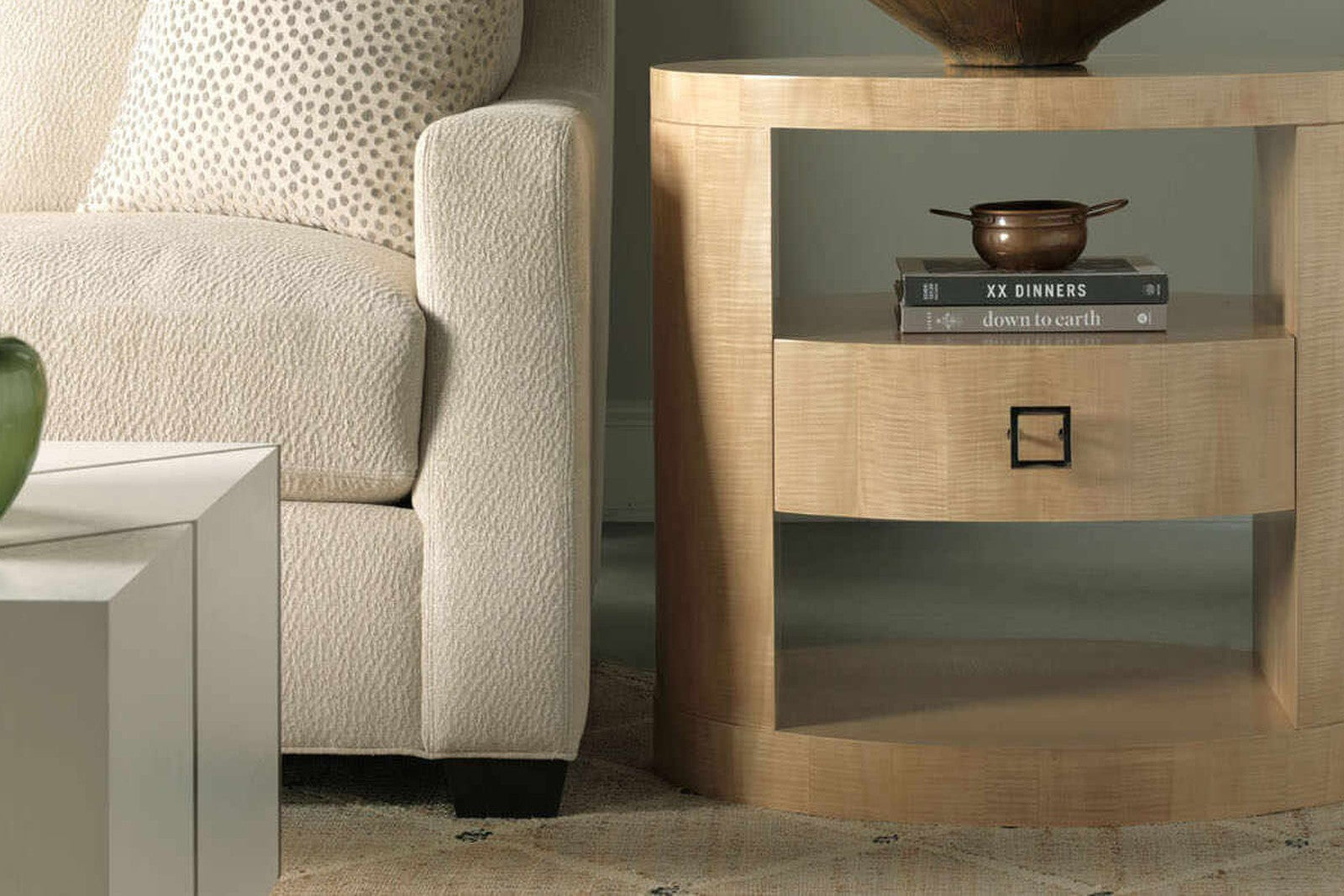
Size matters as much as finish. The Breeze Side Table sits at 24 inches square and 24 inches in height, a scale that works beside a sofa arm or a generous chair. The Breeze One Drawer Side Table comes in at 22 inches wide, with marble and aluminium detailing that cools the pine base. Cocktail tables in this range run from 52 to 58 inches across, suited to seating arrangements that seat four or more.
What Should You Know About Inlay Before Choosing a Table?
Inlay is what separates a hand-worked surface from a printed or applied one. On Theodore Alexander tables you will find brass line inlay scored into the top field, fan and flowerhead inlay at corners, and double stringing in ebonized wood along edges. These techniques come from the English 18th-century cabinetmaking tradition, the same tradition that runs through the work of Adam, Chippendale, Hepplewhite, and Sheraton.
The Caryatids Accent Table, from the Althorp Living History collection, uses khaya, oak, okoume, and morado veneers together. The grain variation across those four materials is exactly what rewards the close attention the piece asks for.
Frequently Asked Questions
Are Theodore Alexander occasional tables veneer construction or frame and panel?
Most pieces use a veneer surface over a constructed foundation. This is standard fine furniture practice: veneer allows matched grain, consistent figure, and inlay work that could not be achieved the same way in other constructions. The collection and the piece determine the specific build.
How do I care for a veneer surface with inlay?
Wipe with a slightly damp cloth and dry immediately. Keep the piece away from heating vents and direct sunlight, as sustained heat and dryness can cause veneer to lift over time, particularly near inlay seams. A paste wax or furniture conditioner suited to the finish type, applied occasionally, keeps the surface stable.
Can a cocktail table from this range work as the only low table in a small seating area?
A 52-inch to 58-inch cocktail table works well as the single low table when the seating group is compact. If the sofa runs longer than 84 inches, adding a side or end table at one end prevents the far seat from feeling disconnected from the arrangement.
The Sutter & Vale Team