Small-Space Furniture Hacks for Apartments and Townhomes
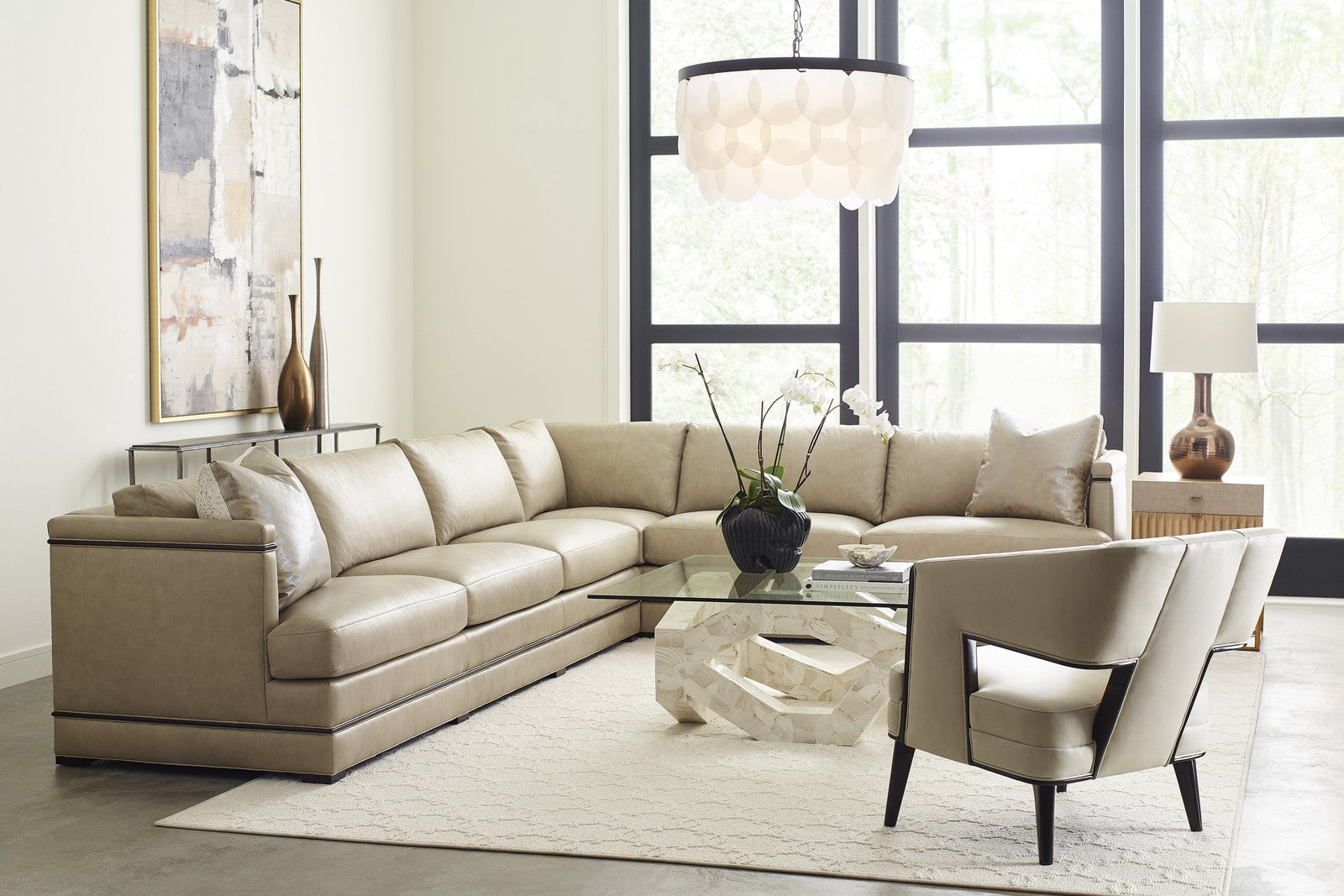
Small-space living calls for specific decisions about scale, leg height, and how each piece earns its floor area. At Sutter & Vale, the Universal Furniture pieces in the living collection are sized and detailed to read as generous without consuming a room. Raised legs, clean silhouettes, and multi-use thinking are the core tools.
How Do You Choose the Right Scale for a Small Room?
Scale is the single most important decision you will make. A sofa or chair that is too deep will shrink a room visually and physically, while a piece that is too shallow can feel insubstantial.
A few general sizing rules for small rooms:
- Sofa depth: Aim for 32 to 36 inches in tight spaces. Deeper than 38 inches starts to dominate.
- Sofa length: In a room under 12 feet wide, keep the sofa at or under 84 inches long.
- Accent chairs: A seat width of 26 to 30 inches reads as a full chair without the footprint of an oversized lounge piece.
- Coffee table clearance: Allow at least 18 inches between the table edge and the sofa front.
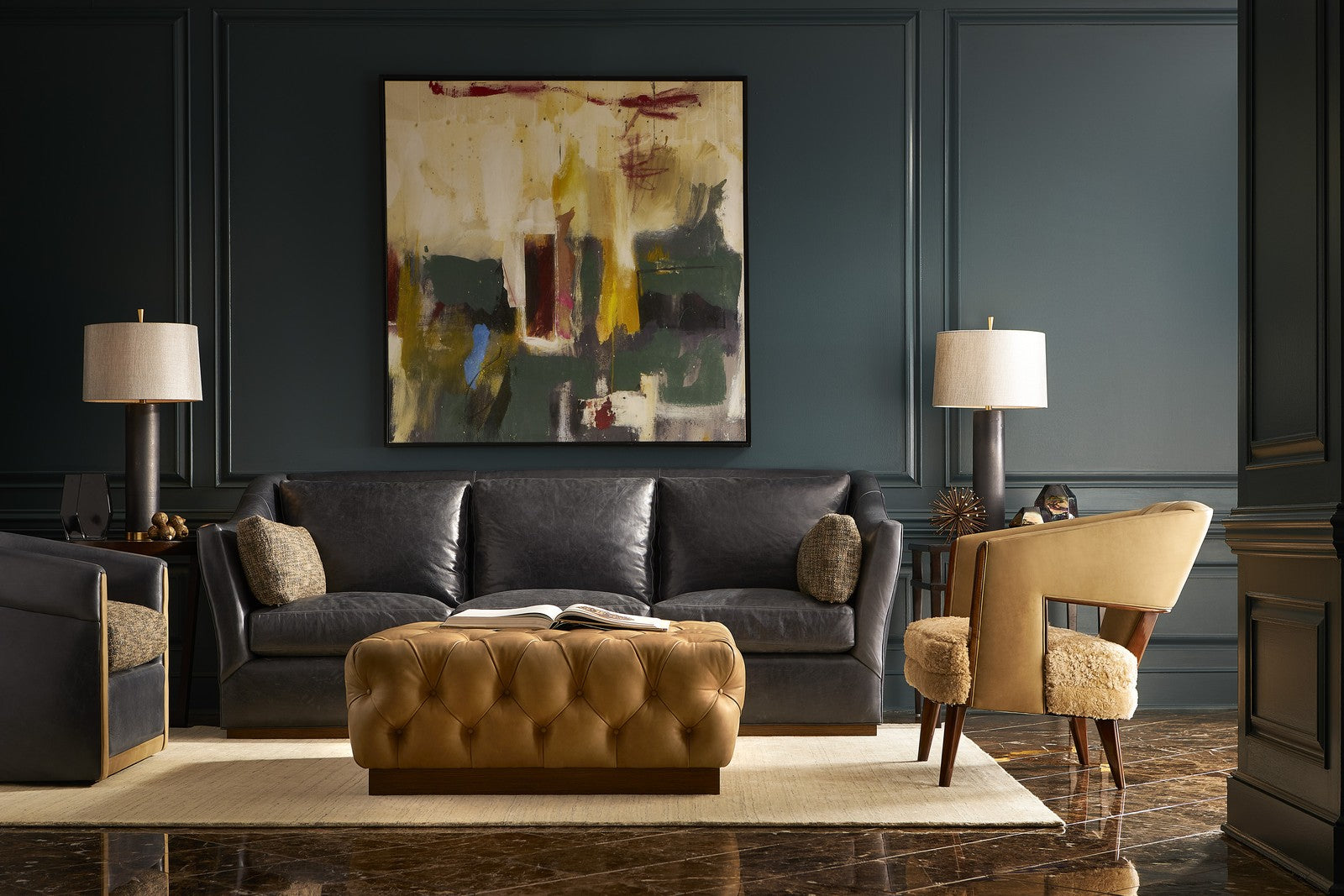
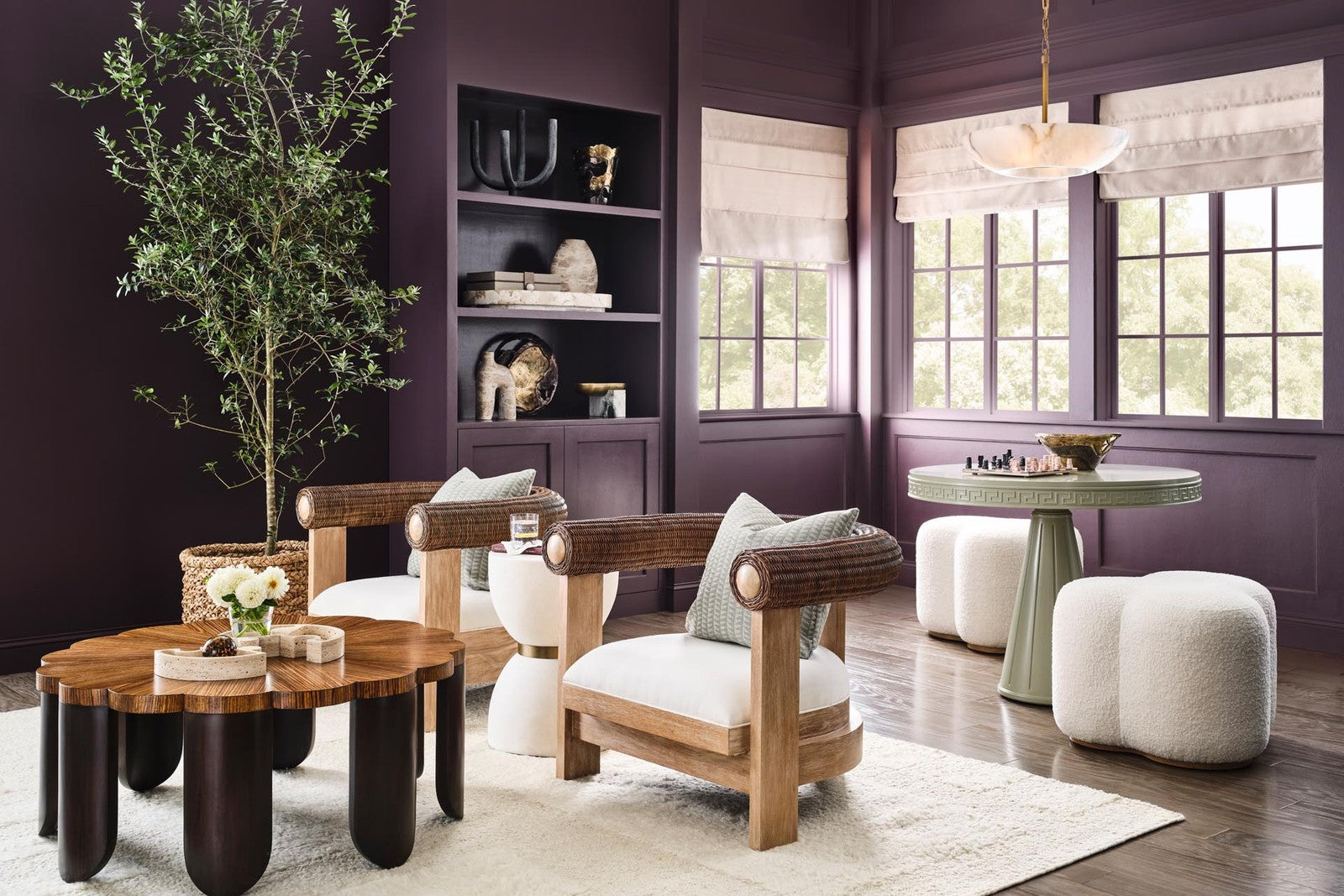
The Camby Chair from Universal Furniture is a useful reference point. Its rounded back and tapered legs give it a compact silhouette, and the removable leg option lets you adapt seat height to different room proportions.
Do Raised Legs Actually Make a Room Look Larger?
Yes, and the reason is straightforward. When you can see floor beneath a piece, the eye reads the room as continuous. A sofa or chair that sits directly on the floor creates a visual block. Raised legs, even modest tapered ones, allow light to pass underneath and preserve the sense of open floor area.
This applies to case goods too. A credenza or media console on legs reads as lighter than the same piece with a solid plinth base, and that difference is visible across even a small room.
What Role Do Multi-Use Pieces Play in a Townhome Layout?
In a townhome, individual floors are often compact, and single-purpose rooms can feel limiting. Multi-use pieces solve two problems at once.
A settee placed in a hallway or at the foot of a bed serves as seating and as a visual anchor that defines the space. An accent chair with swivel function, such as the Camille Swivel Chair, earns its place by orienting toward a conversation or toward a television without requiring you to rearrange the room. The 360-degree rotation means one chair covers two positions.
Other multi-use strategies worth considering:
- Ottoman with storage: Replaces a coffee table and adds hidden volume.
- Extendable dining table: Seats two to four day-to-day, expands for guests.
- Nesting tables: Stack away when the room needs open floor space.
- Bench seating: Works at a dining table and pulls double duty as a surface or extra seat in a living area.
How Should You Arrange Furniture in a Small Living Room?
Arrangement is as consequential as the pieces themselves. The most common mistake is pushing all furniture against the walls. Floating pieces even a few inches from the wall creates depth and makes the center of the room feel deliberate.
A workable starting sequence:
- Place the sofa first, parallel to or at a slight angle to the focal point, whether that is a fireplace, window, or television.
- Position one or two accent chairs to form a conversational triangle rather than a line.
- Add a coffee table or ottoman that you can walk around on at least three sides.
- Use a rug to define the zone. In a small room, all front legs on the rug is often more practical than fitting the entire furniture group on it.
Pieces with visual lightness, such as the Camby Settee with its gently proportioned back, avoid the weight that overwhelms a compact space.
Frequently Asked Questions
What sofa size works best in a studio apartment?
In a true studio, a settee or apartment-depth sofa in the 72-to-80-inch range is usually the practical ceiling. Anything longer competes with the sleeping and dining zones for floor area.
Can an accent chair replace a second sofa in a small living room?
It often works better. A swivel chair offers flexible orientation, takes less floor space than a loveseat, and adds visual variety to the seating arrangement without crowding the room.
How do you prevent a small room from looking cluttered?
Limit leg profiles and finish tones to two or three across all pieces. Consistency in detail, even across different furniture types, lets the eye move through the room without stopping on any single object.
The Sutter & Vale Team