John Richard Lighting: Lamps as Sculpture
John Richard table lamps function as sculpture first and light sources second. At Sutter & Vale, the John Richard collection draws homeowners and designers who have a room that reads well on paper but still feels unfinished. A lamp from this house is often what closes that gap.
What Makes John Richard Lamps Different From Ordinary Table Lighting?
John Richard builds lamps the way it builds everything: by mixing materials and pushing form further than a standard catalogue allows. You will find bases cast in resin, wrapped in textured metal, finished in glazes that shift with the light, or shaped from art glass blown by hand. Bold finishes and sculptural proportions are not reserved for the furniture. They carry into the lighting as well.
How Tall Should a Table Lamp Be, and Where Should It Sit?
Proportion is the starting point for any lamp placement decision.
- On a side table beside a sofa: the bottom of the shade should sit at roughly eye level when you are seated, typically 58 to 64 inches from the floor when the lamp is on its table.
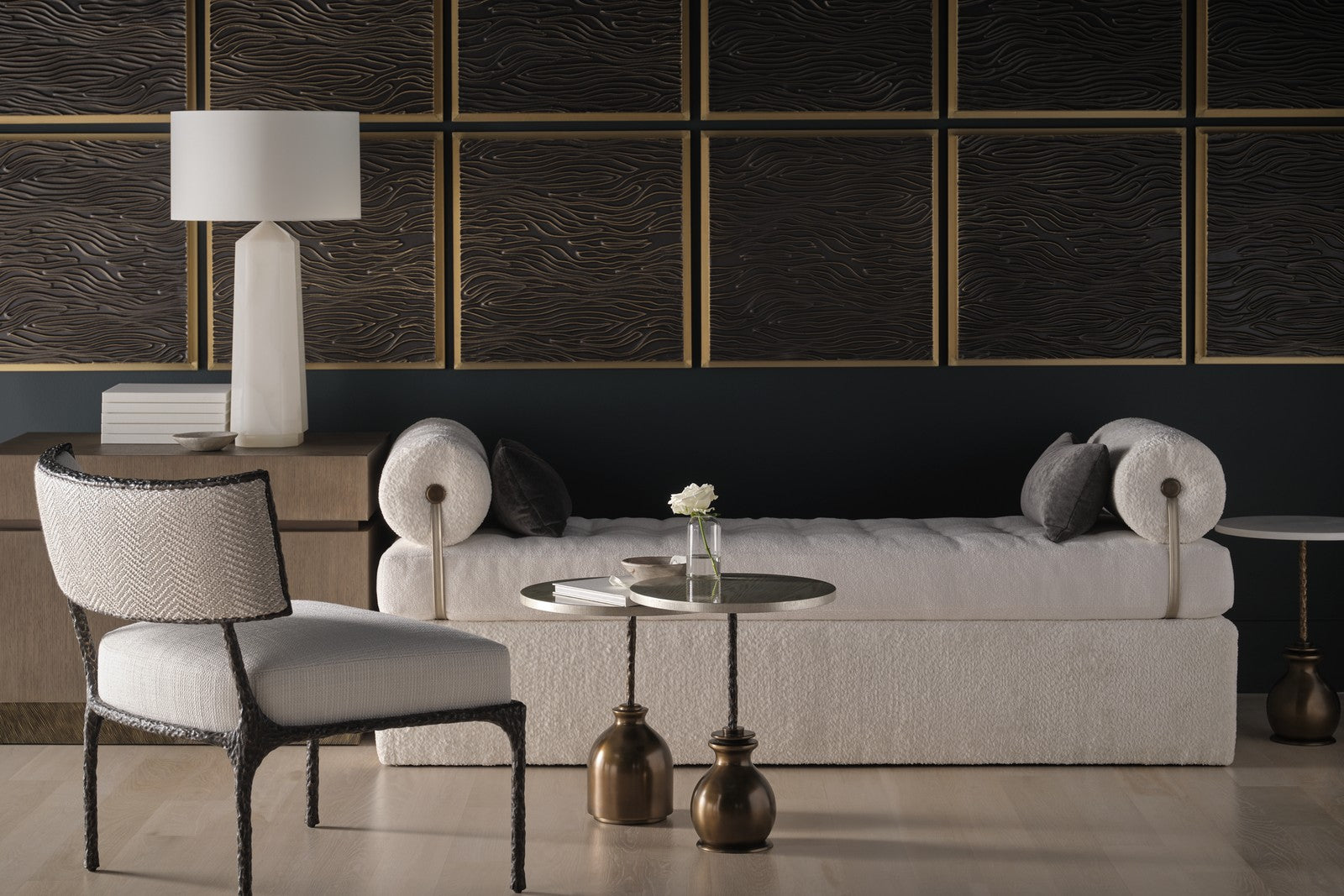
- On a console or credenza: a taller base, 28 to 34 inches including the shade, anchors the surface without competing with art hung above.
- On a desk or writing table: 26 inches total height is a reliable working minimum.
- On a bedside table: the shade bottom should align with your shoulder when you are sitting up, usually 20 to 24 inches above the tabletop.
The shade diameter should not overhang the table edge. A lamp on a 12-inch-deep console needs a shade no wider than 10 to 11 inches across.
How Do You Pair a John Richard Lamp With the Furniture Around It?
Match the visual weight of the lamp to the visual weight of the furniture. A heavy carved console needs a base with substance. A slender lacquered side table can carry something more vertical and spare.
Finish is the next consideration. John Richard lamps tend to arrive in finishes, aged bronze, antique gold leaf, oxidized iron, that relate directly to the house's decorative accessories. Grouping pieces from the same house keeps the palette coherent without making it feel coordinated in an obvious way. A lamp on a console reads better alongside the Mistral Vase in its larger form, where the antique silver surface and the hand-blown glass echo the lamp's own material story. The Vela Vase I, at twenty inches tall in hand-blown glass, can stand beside or behind a lamp base without competing, because both objects are built around form rather than surface decoration alone.
Shade color affects how a lamp reads against the wall. An off-white or linen shade throws warm light downward and keeps attention on the base. A dark or metallic shade makes the lamp read as a stronger graphic statement and suits rooms that already carry bold color.
How Do You Style the Surface Around a John Richard Lamp?
Treat the lamp as the tallest object on the surface and build down from it.
A working arrangement on a console might look like this:
| Object | Approximate Height |
|---|---|
| John Richard table lamp | 30 to 36 inches |
| Art glass vase (e.g., Vela series) | 14 to 20 inches |
| Small decorative object or candleholder | 6 to 10 inches |
| Stack of books or tray | 2 to 4 inches |
Odd numbers of objects group better than even numbers. Leave open surface visible. The lamp does not need company on all sides.
Frequently Asked Questions
Can a John Richard lamp work in a contemporary room, or is it too traditional?
John Richard lamps mix materials and push form in ways that read as current rather than period-specific. A sculptural resin or art-glass base works in rooms with clean architectural lines as readily as it does in formal traditional spaces. The deciding factor is finish, not silhouette.
How do I know if a lamp base is the right scale for my table?
Measure your table height and depth first. The lamp base alone, without the shade, should be roughly one-third the height of the table it sits on. The shade diameter should not exceed the table depth.
Should table lamps on either side of a sofa match exactly?
Matching lamps on either side of a sofa is a reliable approach, but it is not required. Lamps that share a finish or material family but differ in silhouette create visual interest while still reading as a considered pair.
The Sutter & Vale Team