How to Style a Coffee Table
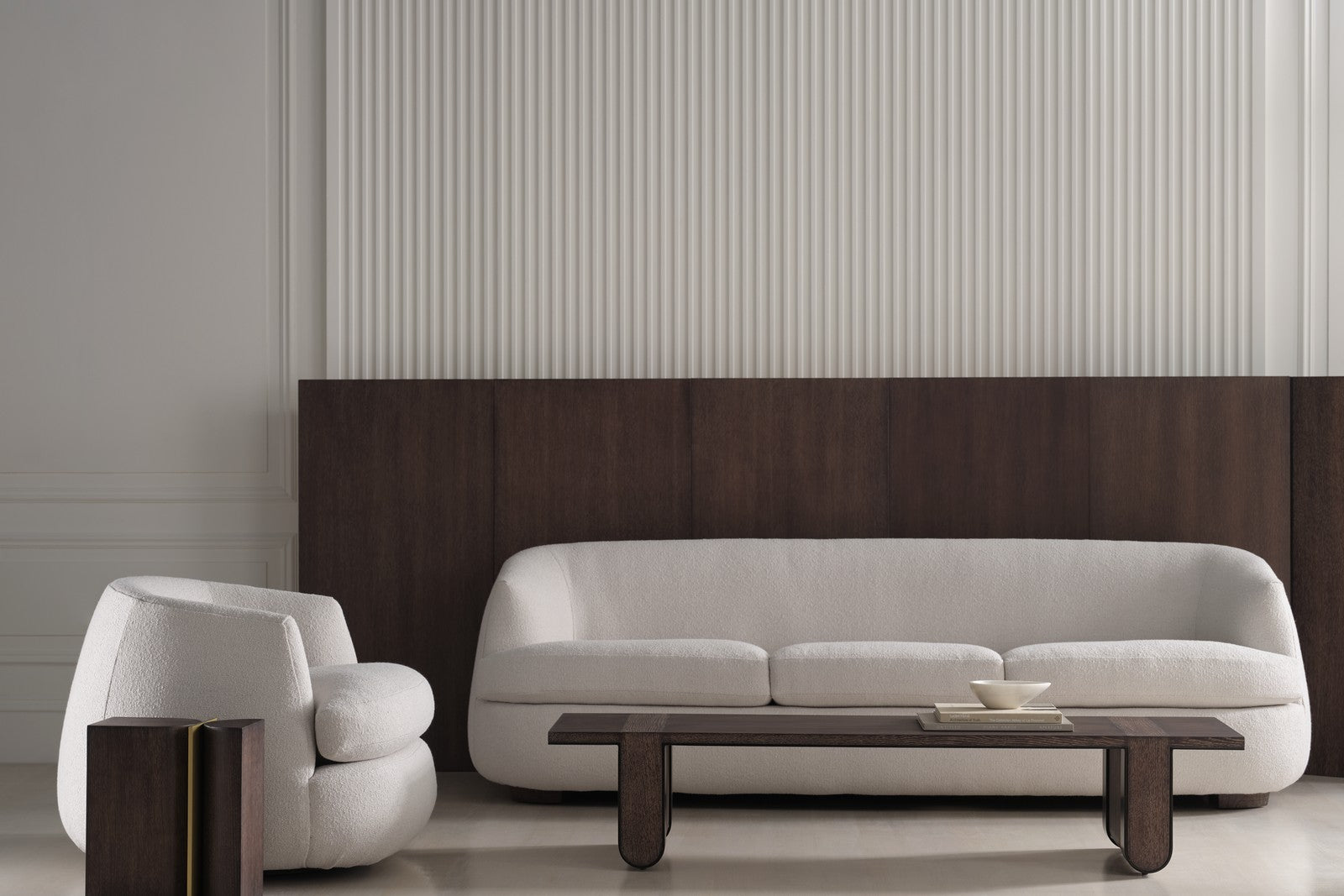
A coffee table arrangement looks intentional when it has one anchor object, two or three supporting pieces at varied heights, and at least a third of the surface left open. Global Views, available at Sutter & Vale, offers the accent objects that make this straightforward: sculptural forms with enough texture and scale to do the work without crowding the surface.
What goes on a coffee table, and how should I arrange it?
Start with a tray, then build inside it. A tray creates a boundary, and boundaries make groupings look deliberate. Without one, individual objects scatter visually. With one, even three mismatched pieces read as a composition. Browse the Global Views trays and bowls to find a shape that fits your table's footprint. A rectangular tray suits a long, low surface. A round one softens a square table.
How many objects should I use, and what size?
Three to five objects is the working range for most coffee tables. Vary the heights so the arrangement has movement.
| Object role | Approximate height | Example |
|---|---|---|
| Anchor, tallest piece | 10 to 18 inches | Candlestick or sculpture |
| Mid-height object | 4 to 9 inches | Box or bowl |
| Low or flat piece | Under 4 inches | Game set or small tray |
The Harbin Bamboo Candlestick in the large size works as an anchor. Its blackened, branch-like stem reads sculptural with or without a candle. Pair it with the Jigsaw Swivel Box in alabaster as a mid-height counterpoint, then lay the Augustus Alabaster Chess and Checkers Set flat as the low element.
How do I handle a round coffee table differently?
Keep the arrangement tighter and more centered. A round table loses balance when objects cluster to one side. Use a round tray or bowl as your anchor point, then place two or three smaller pieces around it. The Jasper Bowl Wide, carved from a single mass of deep emerald stone, gives a round table a strong visual center and enough scale to stand alone on smaller surfaces.
What makes an arrangement look off, and how do I fix it?
The most common problems are identical heights, too many objects, and no open space left to breathe.
- All-same-height: add one tall candlestick or remove the mid-range pieces
- Too crowded: pull one object off and place it elsewhere in the room
- Looks random: add a tray to contain the grouping
- Too safe: introduce one material that contrasts, stone against lacquer, matte against gloss
The Icon Sculpture in black lacquer does this work well. Its glossy, mirror-like finish reads differently from any organic material around it, and the stacked-sphere form adds vertical interest without demanding much footprint.
Frequently Asked Questions
How much of the coffee table surface should stay clear?
Aim to leave between one-third and one-half of the surface open. That open space is part of the composition, not wasted room. It also keeps the table functional for drinks, books and remotes.
Can I style a coffee table with objects I already own?
Yes. A bowl or tray from the Global Views trays and bowls collection is an easy way to organize pieces you already have. The tray does the compositional work, so the objects inside it need only share a rough scale.
Should coffee table objects match the room's style?
They should relate to it, but they do not need to mirror it exactly. One object in a contrasting material or finish, such as an alabaster box in a room full of wood and linen, gives the eye a place to rest and keeps the space from reading flat.
The Sutter & Vale Team