How to Layer Lighting in a Living Room
Layered lighting in a living room means using three distinct source types together: ambient, task, and accent. A single overhead fixture flattens a space. Three layers give you control over mood, function, and depth. Wildwood's lighting collection, available at Sutter & Vale, offers pieces designed to work at every level.
What Is Ambient Lighting, and Where Does It Go?
Ambient light is the room's base layer. It fills the space broadly without harsh shadows.
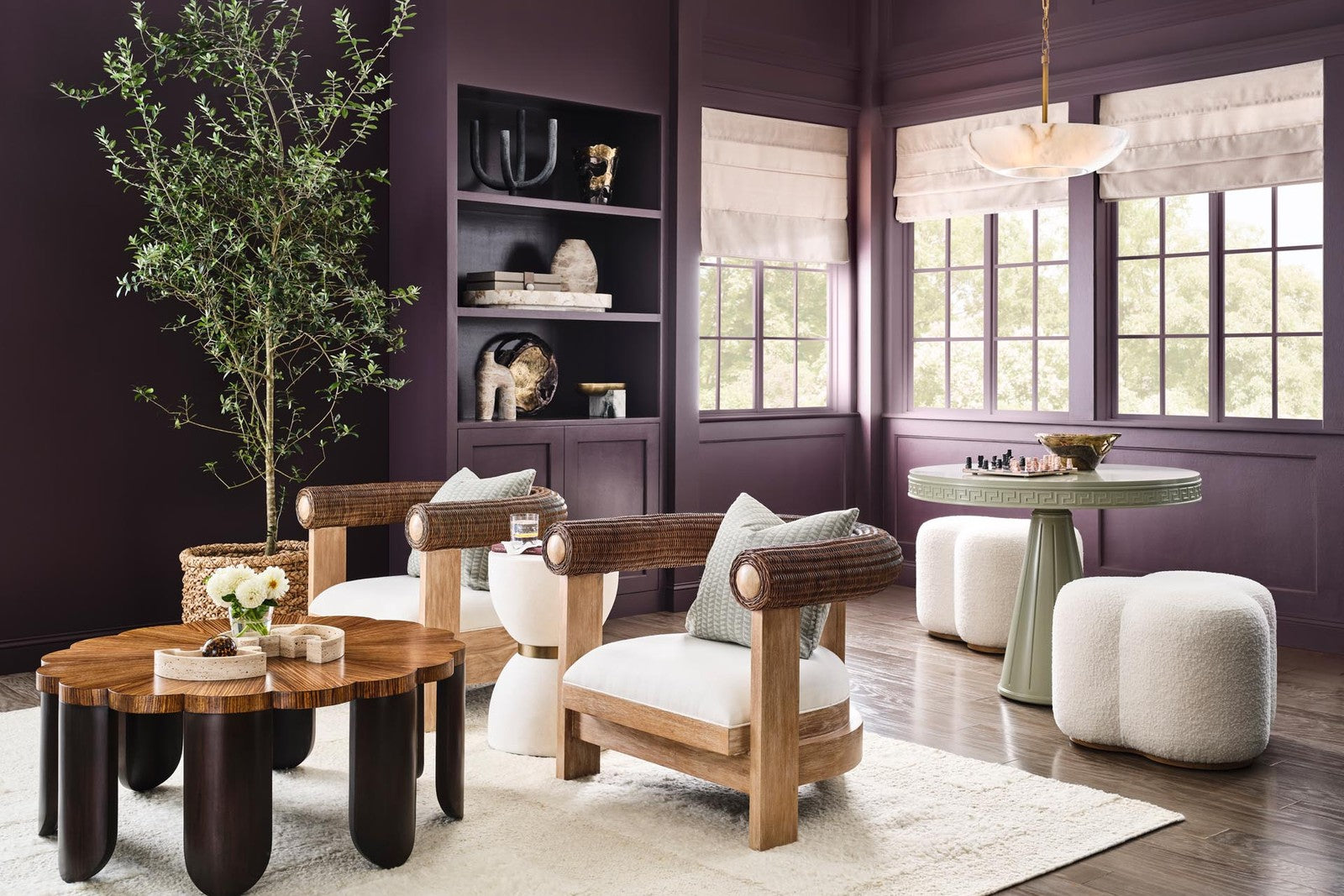
A chandelier handles this role in most living rooms. The Royal Palm Chandelier in White is a six-arm tole chandelier with palm frond details drawn from Palm Beach foliage. Its slender form spreads light across a room without dominating the ceiling. Hang the bottom of any chandelier at least 7 feet above the finished floor in a living room with standard 9-foot ceilings.
What Is Task Lighting, and Why Does a Living Room Need It?
Task lighting targets a specific activity: reading, working, or playing a game. Without it, people strain toward the overhead fixture.
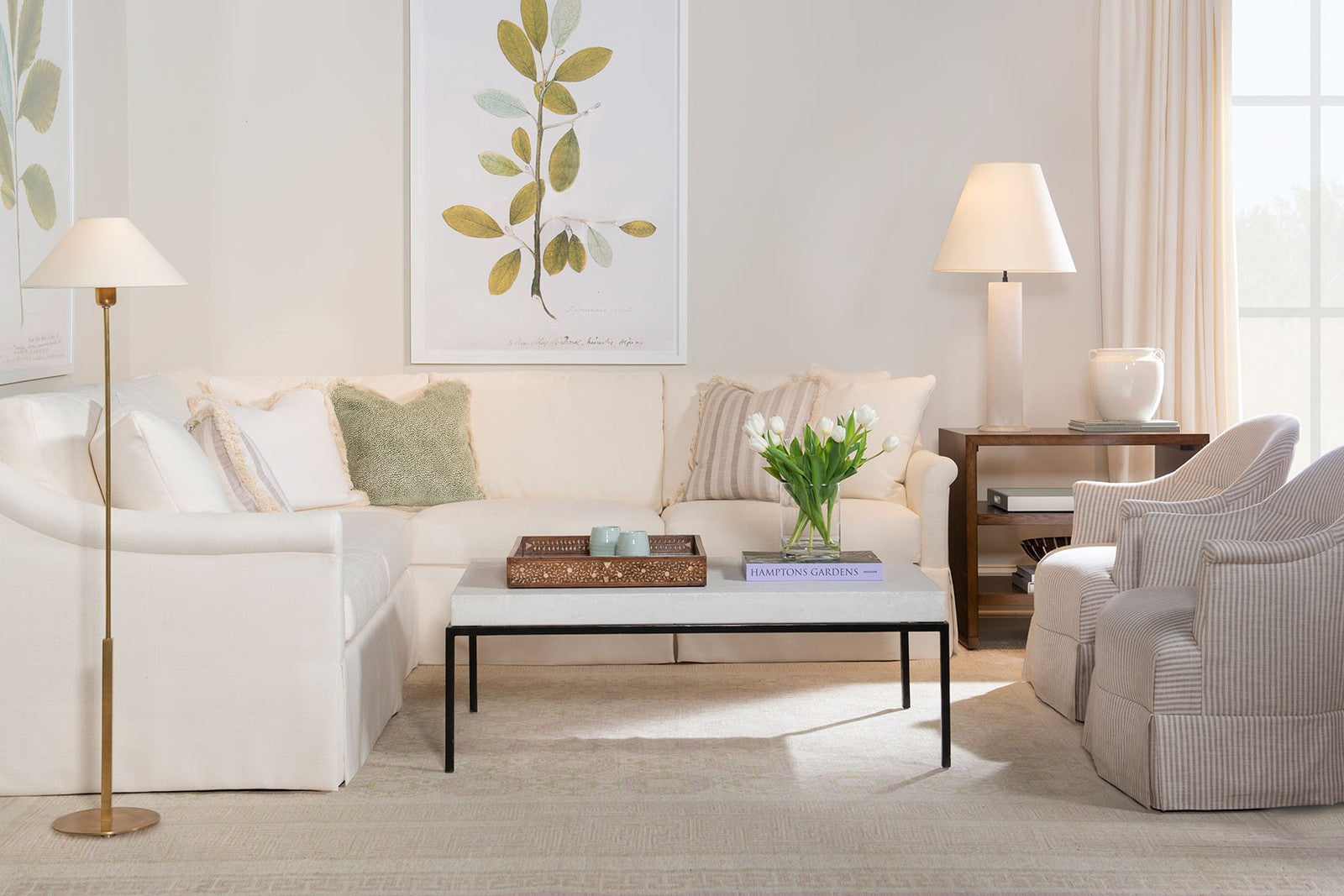
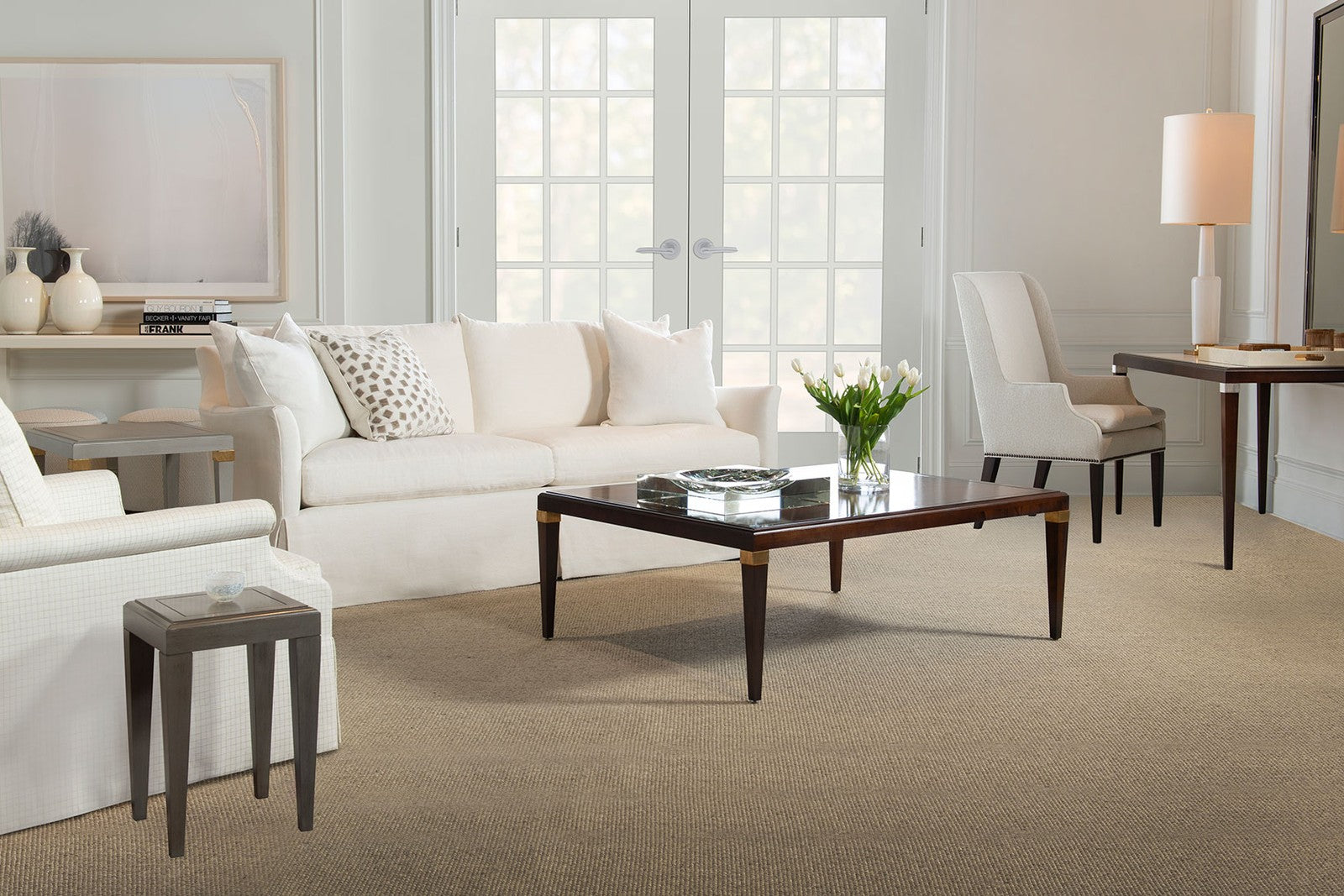
Table lamps placed beside seating do most of this work. A lamp shade bottom should sit at roughly seated eye level, around 38 to 42 inches from the floor. The Palma Table Lamp in White, with its white linen shade and palm frond base, gives a reading chair the focused light it needs while standing on its own as a sculptural object.
What Is Accent Lighting, and How Is It Different?
Accent light draws attention to something specific: a piece of art, a bookcase, or an architectural detail. It adds dimension by creating contrast between bright and shadowed areas.
Small table lamps on shelves or console tables can serve as accent sources, especially when their bases are as decorative as their function. A bolder base, such as the Red Gourd Lamp with its hand-decorated crackle earthenware, placed against a neutral wall creates visual interest at a lower level without competing with the ambient source above.
How Do You Choose Pieces That Work Together?
Coherence comes from repeating one or two design motifs across the layers, not from matching everything exactly.
| Layer | Source | Placement tip |
|---|---|---|
| Ambient | Chandelier or large pendant | Center of ceiling, 7 ft. minimum clearance |
| Task | Table lamp beside each seat | Shade bottom at 38 to 42 in. from floor |
| Accent | Smaller table lamp or shelf lamp | Below eye level, near artwork or cabinetry |
Browse the full Wildwood lighting collection at Sutter & Vale to compare finishes and scales across all three layers before committing to a single piece.
Frequently Asked Questions
How many light sources should a living room have?
Most rooms need at least three sources spread across the three layers. Larger rooms, above 300 square feet, often benefit from five or six, particularly when there are multiple seating areas or dedicated reading chairs.
Do all three layers need to be on separate switches?
Separate switches or dimmers for each layer give you the most control. Putting ambient and task lighting on one switch removes your ability to shift the mood without turning everything on or off together.
Can a table lamp serve as task and accent lighting at once?
It can. A lamp with a decorative base and a linen or translucent shade casts useful reading light while also drawing the eye as an object. Positioning it slightly off-center on a side table lets it fulfill both roles without any modification.
The Sutter & Vale Team