How to Choose a Dresser or Chest for Your Bedroom
Choose a dresser when you have a long wall and want horizontal storage; choose a chest when your wall is narrow and vertical stacking works better. For most bedrooms, a dresser between 60 and 72 inches wide is the practical range. Theodore Alexander's collection at Sutter & Vale covers that span, and the choice comes down to your wall, your storage count, and your room's proportions.
What Width and Height Should a Bedroom Dresser Be?
Width should follow the wall, not the other way around. Measure the wall, then subtract at least 6 inches on each side so the piece has room to breathe. A quick reference:
| Room size | Suggested dresser width |
|---|---|
| Small bedroom, under 120 sq ft | 48 to 60 inches |
| Mid-size bedroom, 120 to 180 sq ft | 60 to 66 inches |
| Primary bedroom, over 180 sq ft | 66 to 72 inches |
Height for most dressers falls between 30 and 36 inches. If you plan to hang a mirror above, confirm the combined height clears your ceiling by at least 12 inches. Leave 36 inches of clear floor in front so drawers open without blocking the path through the room.
Dresser or Chest: Which Do You Actually Need?
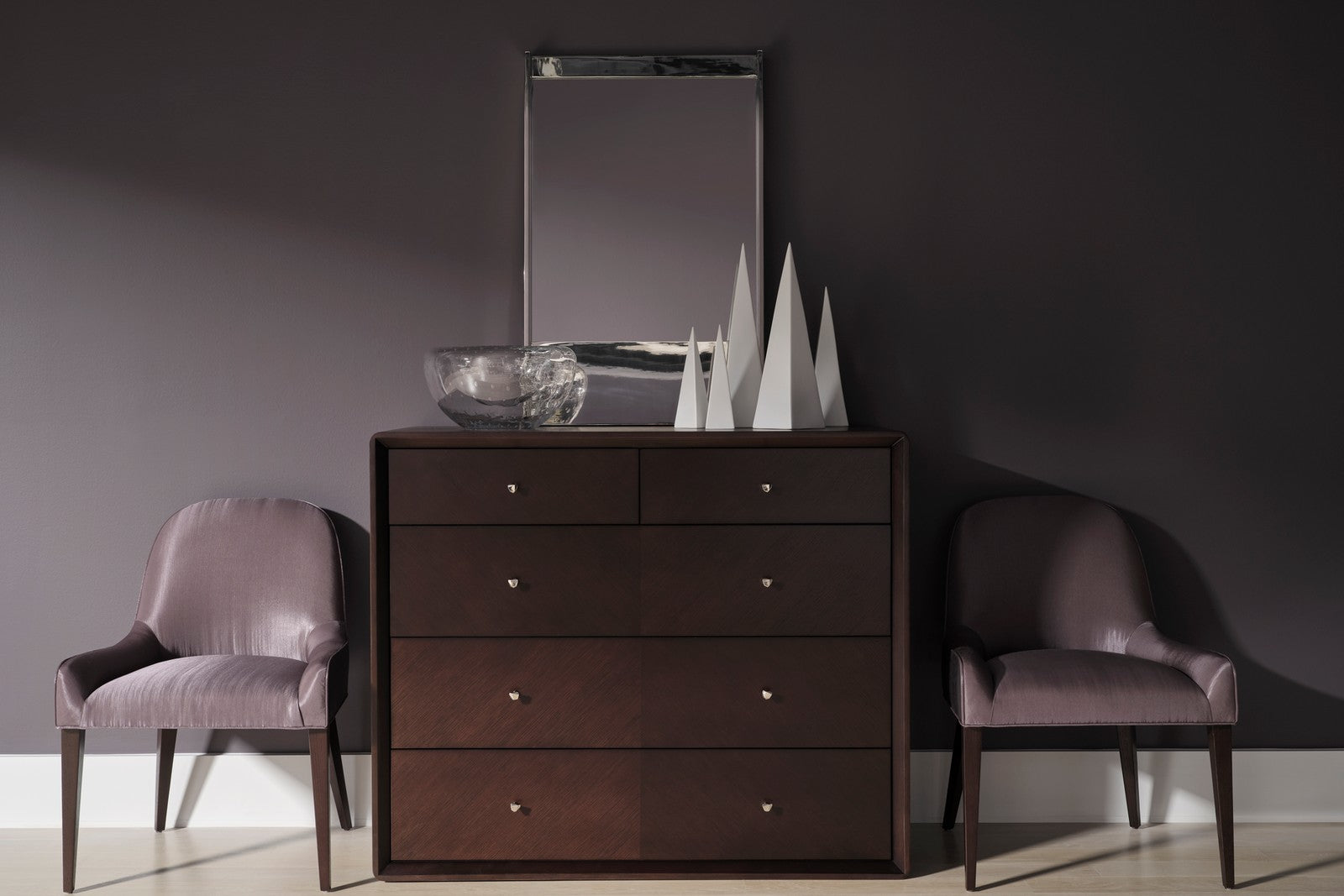
A dresser is wide and low, with two or three rows of drawers across a broad horizontal span. A chest is narrower and taller, with drawers stacked vertically. A dresser suits a long wall and pairs naturally with a mirror above. A chest fits a shorter wall or a tighter corner and offers more drawer depth for folded clothing. If the room has room for both, placing a chest on an adjoining wall solves storage without crowding either piece.
What Wood and Finish Works Best in a Bedroom?
Anchor the room in one wood tone, then vary texture on secondary pieces. Theodore Alexander builds most bedroom dressers in khaya, walnut veneer, or maple veneer, with hardware in brass or stainless steel. Those paths read differently:
- Khaya with brass hardware: warm, suits cream walls, linen textiles, and medium wood floors
- Walnut veneer with brass: richer and deeper, works with layered textiles and darker wall colors
- Maple veneer with steel hardware: cooler, reads well alongside white oak floors or grey upholstery
The Brooksby Dresser in khaya and the Coronet Walnut Dresser at 72 inches illustrate how far apart those two material paths can sit while still belonging to the same house. Browse the full range at dressers and chests.
How Many Drawers Do You Actually Need?
Count what you are storing before you commit to a piece. A two-person primary bedroom generally needs eight to ten full-size drawers across all case pieces combined. A six-drawer dresser paired with a two-drawer nightstand on each side covers most households. If you share the dresser, a piece at 64 inches or wider gives each person three or four drawers without compromise.
Frequently Asked Questions
Can a dresser work in a room without a closet?
A dresser with six to nine drawers handles folded clothing well. Add a chest beside it for bulkier items, and a freestanding wardrobe if you need hanging space. The combination covers most of what a built-in closet would.
How much clearance should there be in front of a dresser?
The standard is 36 inches, enough to open drawers fully and move past them without turning sideways. In a smaller room, 30 inches is workable as long as the drawers pull toward open floor rather than toward the bed or a door.
Is it worth buying a dresser and chest from the same collection?
Matching the collection keeps wood grain, finish, and hardware consistent, which simplifies the rest of the room. If you prefer to mix pieces, hold the wood tone constant and let hardware vary slightly so the room has some movement without feeling mismatched.
The Sutter & Vale Team