How to Choose a Bookcase or Etagere
A bookcase or etagere is the right choice depending on three things: how much you need to store, how much wall or floor space you have, and whether the piece needs to stand alone or work with existing furniture. Sherrill Occasional's bookcase and etagere collection at Sutter & Vale covers all of these scenarios with finish coordination built in.
What Is the Difference Between a Bookcase and an Etagere?
A bookcase has a solid back panel; an etagere is open on all sides. Bookcases suit walls and anchor a room. Etageres work behind sofas, at room centers, or anywhere you want to display objects without blocking light or sightlines. If the piece will float in a room, choose an etagere.
What Size Should You Choose?
Measure the wall or zone first, then work backward. A few standard rules apply:
- Leave at least 6 inches of breathing room on each side when a bookcase sits between architectural elements.
- Standard shelf depth runs 10 to 12 inches for books; decorative-only pieces can be shallower.
- A bookcase taller than 84 inches reads as a built-in and can feel imposing in rooms under 9 feet.
- For a low-profile look, pieces at 48 to 60 inches tall work well under windows or alongside doors.
If you are sizing an etagere for behind a sofa, match the width of the sofa or go slightly wider. Going narrower breaks the visual logic of the grouping.
How Do You Match a Bookcase to the Rest of the Room?
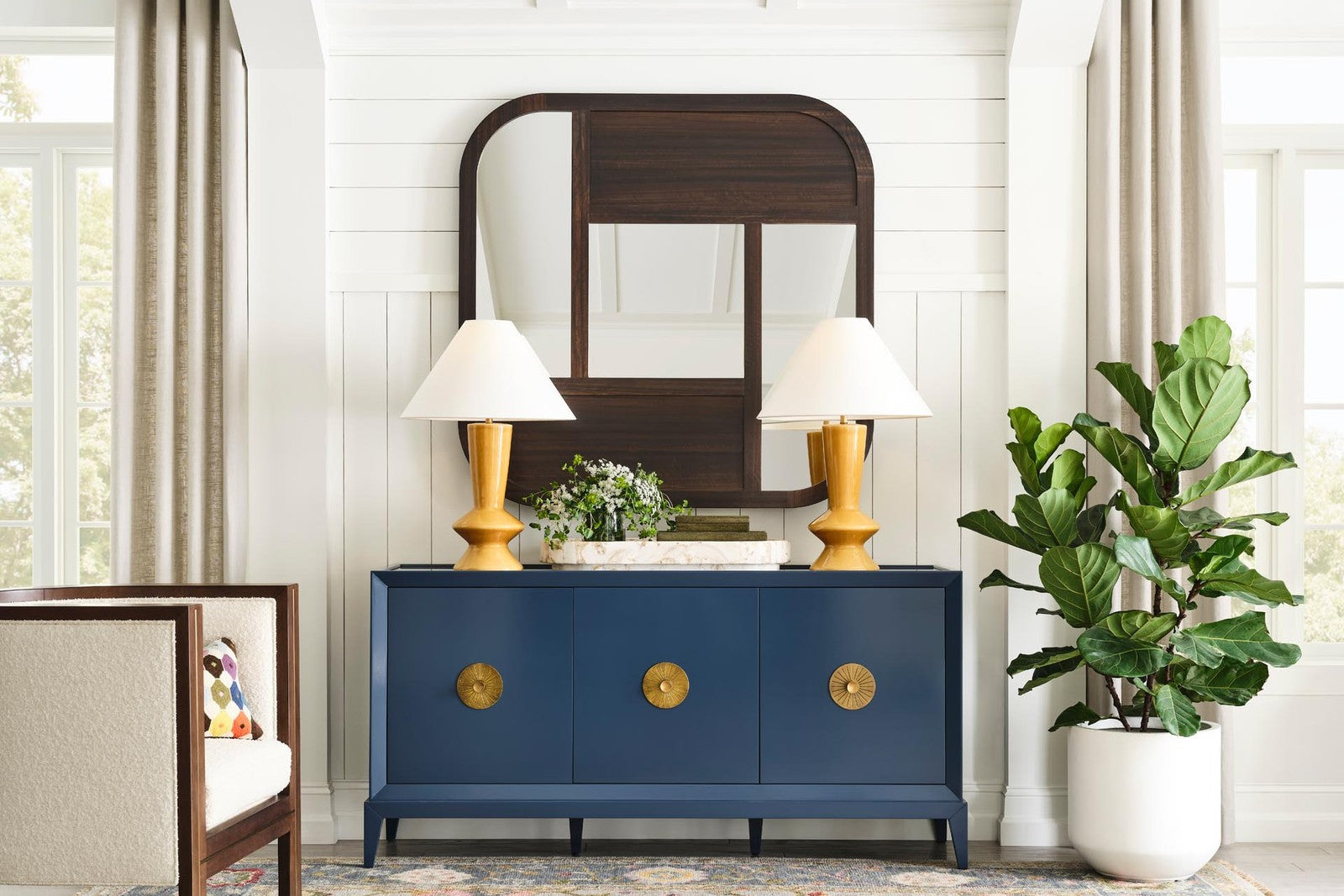
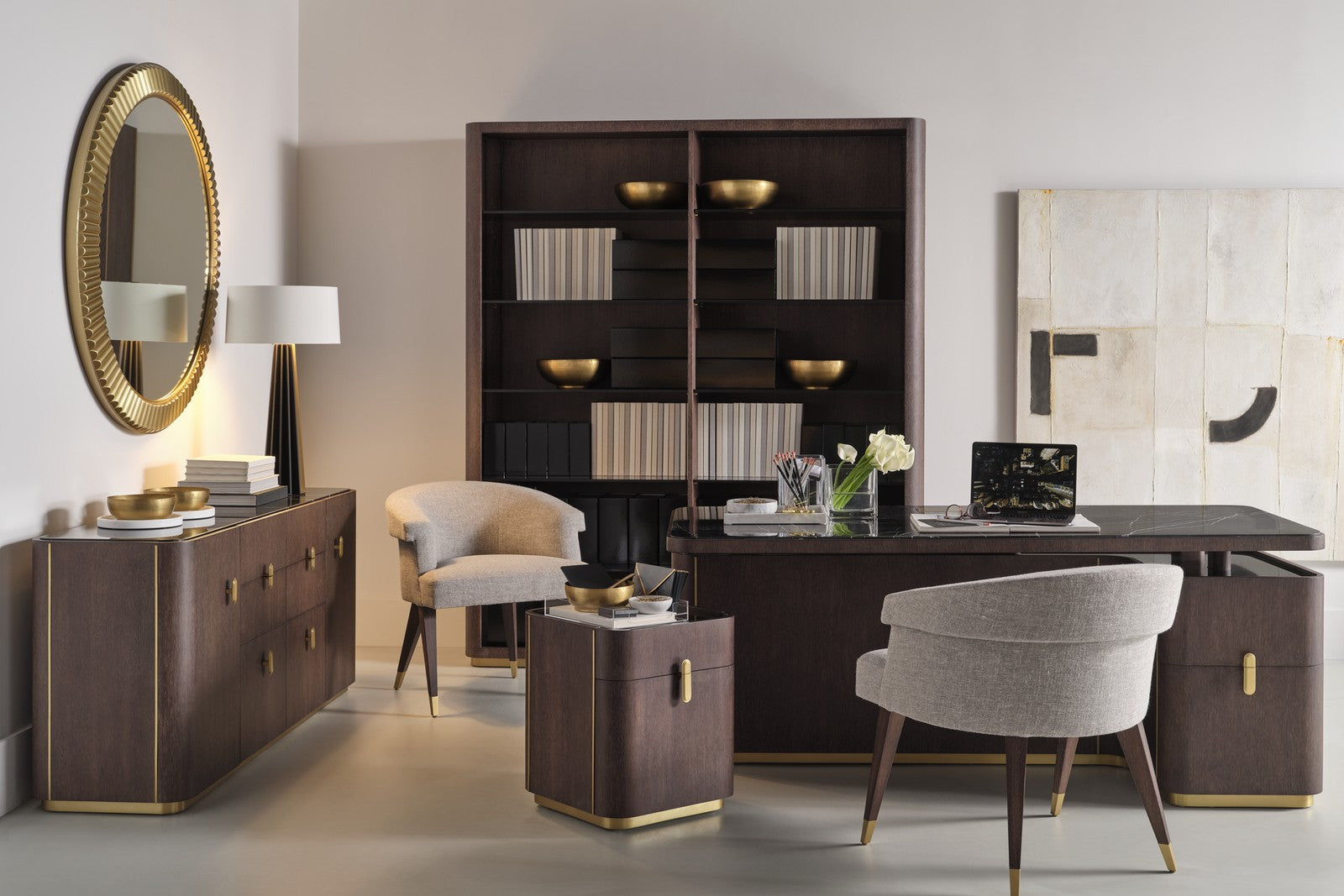
Finish consistency is the deciding factor. Sherrill Occasional builds its casegoods, accent tables, and consoles with finish coordination in mind, so a bookcase specified from the same program reads as deliberate alongside other pieces. If you already have Sherrill seating, the cabinetry program extends that coordination to storage pieces.
Ask two questions: What wood tone anchors the room now? What hardware finish appears on other furniture? Match those two reference points and the bookcase will settle into the room rather than compete with it.
Open Shelves, Closed Cabinets, or a Combination?
| Option | Best Use |
|---|---|
| All open shelves | Art books, objects, collected display |
| All closed cabinets | Media components, clutter, office storage |
| Combination | Most living rooms, libraries, home offices |
A combination unit, open above and closed below, gives you display space at eye level and concealed storage near the floor where it draws the least attention.
Frequently Asked Questions
Can an etagere support heavy books?
Most residential etageres are designed for decorative display rather than dense book loads. If you plan to store full runs of hardcovers, choose a bookcase with a solid back and look for adjustable shelves rated for the weight you expect.
How do I style shelves without making them look cluttered?
Work in groups of three objects at varying heights, leave some shelves partly empty, and vary between books laid flat and books standing upright. Negative space is part of the composition.
Does Sherrill Occasional offer custom finishes on bookcases?
Yes. Sherrill Occasional's custom cabinetry program allows you to specify finishes that coordinate with other pieces in a room. Your Sutter & Vale consultant can walk you through the available options.
The Sutter & Vale Team