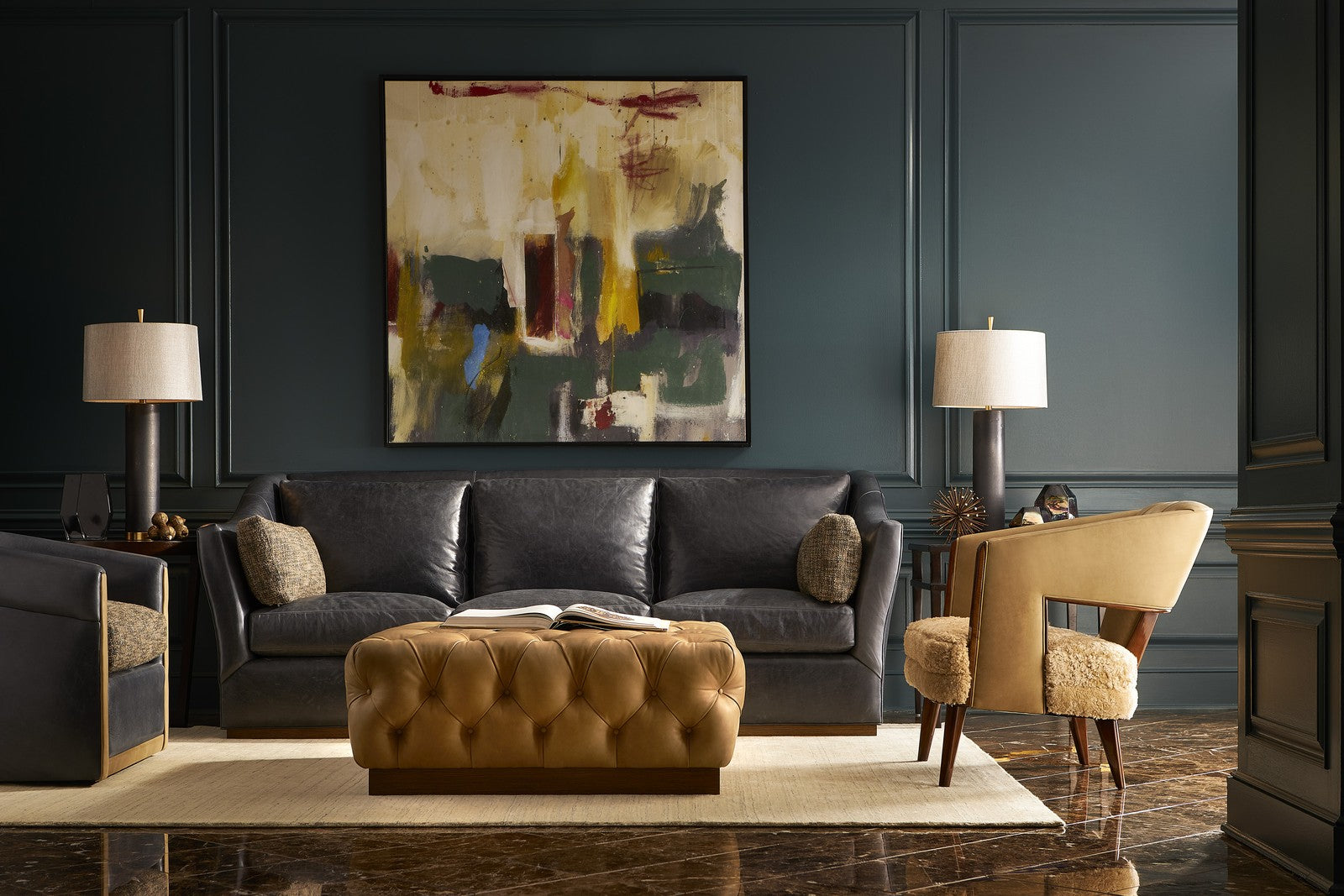
How to Care for Leather Furniture
Hancock & Moore leather furniture is built to last twenty or more years of daily use. The house selects each hide to a standard most upholstery makers never reach, then benches every piece in North Carolina. Sutter & Vale carries the full line. The guidance below applies to any Hancock & Moore piece, from a recliner to an accent chair.
How Often Should You Clean Leather Furniture?
Wipe down leather seating once a week and condition it two to four times a year. That rhythm handles the two things that degrade leather fastest: surface grime that works into the grain, and dryness that leads to cracking.
For weekly cleaning:
- Use a soft, dry or slightly damp cloth.
- Work in the direction of the grain.
- Never use all-purpose household sprays, alcohol-based products, or baby wipes.
- Blot spills immediately; do not rub.
For conditioning, use a product made for upholstery leather. Apply a small amount to a clean cloth, work it in lightly, and let it absorb before the piece is used again.
Does Direct Sunlight Damage Leather Seating?
Yes, UV exposure fades color and dries out the hide faster than almost any other factor. Position leather furniture at least 24 inches from a window that receives direct afternoon sun. If the room layout makes that impossible, apply UV-filtering window film to the glass.
Heat vents are the other common culprit. Keep leather pieces at least 12 to 18 inches from floor registers or baseboard heaters.
What Should You Do When a Spill Happens?
Act within the first minute. Blot, do not wipe, using a clean dry cloth. Work from the outside of the spill toward the center so the liquid does not spread. Once the moisture is lifted, let the area dry at room temperature. Do not use a hair dryer or set the piece near a heat source to speed drying.
For oil-based spills, blot what you can and let the leather absorb the rest naturally. Most full-grain hides will pull oil in and the mark will fade over a few days. If it does not, contact a leather specialist rather than applying a solvent yourself.
Does Leather Need Different Care Depending on the Finish?
Yes, and the difference matters. Hancock & Moore offers protected, semi-aniline, and full-aniline options across its line.
| Finish | Surface coating | Moisture resistance | Sensitivity |
|---|---|---|---|
| Protected | Yes | Higher | Lower |
| Semi-aniline | Partial | Moderate | Moderate |
| Full-aniline | None | Lower | Higher |
Full-aniline hides are dyed all the way through with no surface coating. They show natural grain variation and character marks, and they respond more noticeably to moisture and abrasion. Protected leathers tolerate slightly more cleaning contact. If you are choosing a hide for a high-use room, confirm the finish grade before you finalize your order. The Lennon Chair and the Campaign Chair in the accent chairs collection are both made to order, so the finish choice is made at that stage.
Frequently Asked Questions
Can I use leather conditioner from a hardware store on upholstery leather?
Products sold for leather boots or car seats often contain silicone or petroleum distillates that can discolor furniture-grade hides or break down a finish coat over time. Use a conditioner specified for upholstery leather, and test it on a hidden area first.
How do I handle a scratch on full-grain leather?
Light surface scratches on full-grain leather can often be reduced by rubbing the area gently with a clean fingertip. The natural oils in skin help the hide reabsorb minor abrasions. Deeper scratches should be assessed by a leather repair professional rather than treated with a filler product from a general retailer.
Does leather furniture need a break-in period?
Most full-grain upholstery leather softens and conforms to use over the first several months. Slight creasing at seat edges and arm rolls is normal and indicates the hide is responding to use as it should. It is not a defect.
The Sutter & Vale Team