Global Views Vases and Trays: Styling a Table, Shelf or Console
Global Views vases and trays are accent pieces with enough sculptural weight to give a room a clear focal point. At Sutter & Vale, the Global Views collection draws from design traditions around the world, with vessels and objects chosen because they hold their own on a console, shelf, or table without additional context. The result reads considered, not assembled.
Which Vase Silhouettes Does Global Views Offer, and How Do They Differ?
Three distinct shapes run through the line: the tall trumpet, the squat wide-shoulder, and the slab-backed architectural vessel. Each reads differently depending on where you place it.
- Tall trumpet: A narrow neck rising from a broad weighted base. The Modern Vase in Rust, Large brings sculptural height to a console or mantel. Use it where vertical emphasis is needed.
- Squat wide-shoulder: A broad conical body with a compact neck. The Modern Vase in Rust, Squat has a low center of gravity that grounds a surface already carrying height.
- Slab-backed: The Brim series sets a vessel form against a flat rectangular backplate, so the piece reads as much like sculpture as a conventional vase. The Brim Vase in Petal, Slim is a clear example of this architectural play of positive and negative space.
How Do You Build a Vase Grouping on a Console or Shelf?
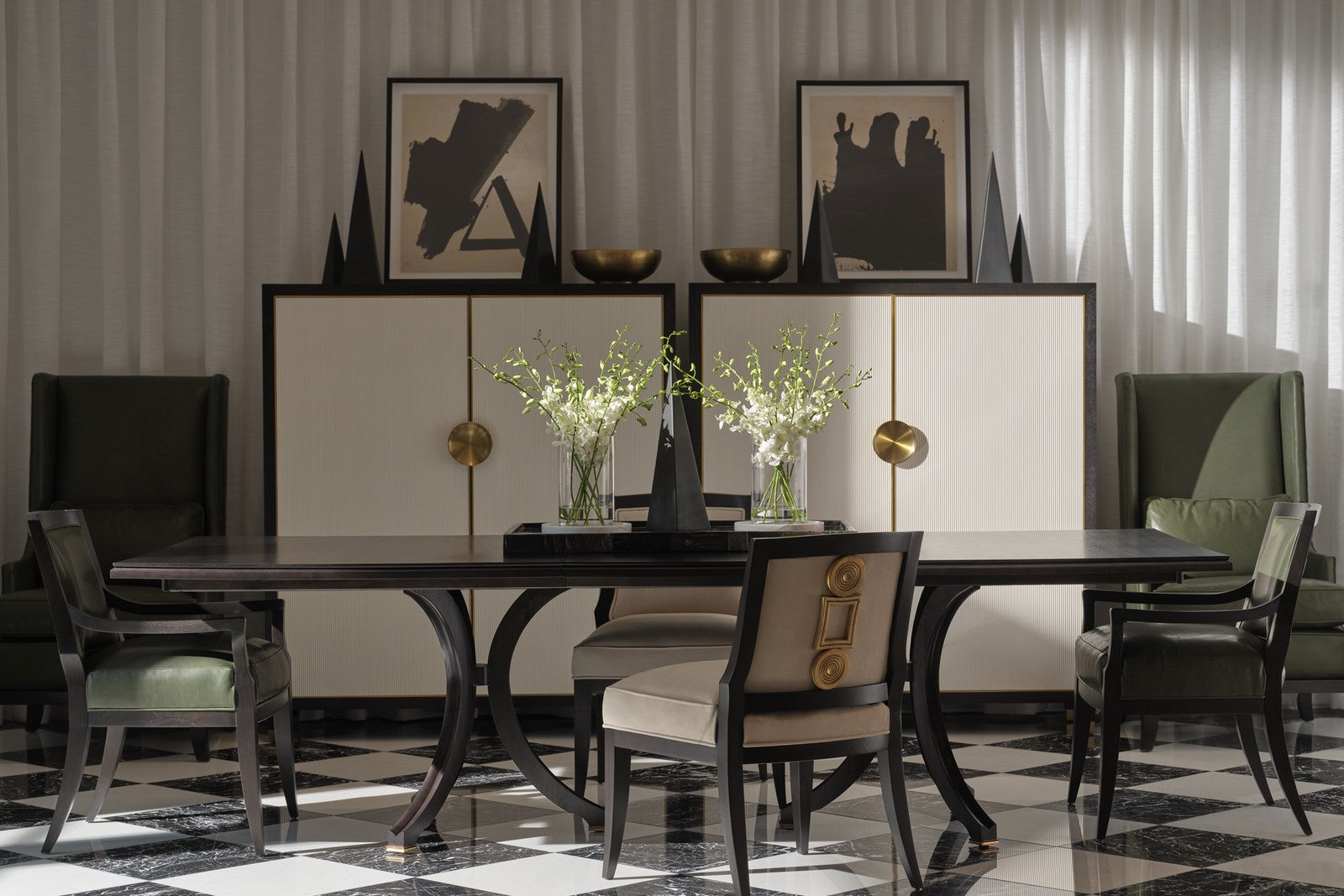
A well-proportioned grouping uses three pieces at varied heights and holds to two or three finishes at most. Odd numbers read better than even ones because the eye moves through the group rather than stopping at matched pairs.
Start with your tallest piece at one end, drop to a mid-height form near the center, and finish with a low, wide silhouette on the opposite side. The Modern Vase in Moss, Small works as a low anchor opposite a taller rust piece. Its matte mineral finish holds its own without competing for attention.
For color, the rust and moss finishes in the Modern series share enough warmth to sit together comfortably. The petal and rainwashed tones in the Brim series read softer and work well against white or pale plaster walls.
How Do Trays Factor Into a Table or Console Arrangement?
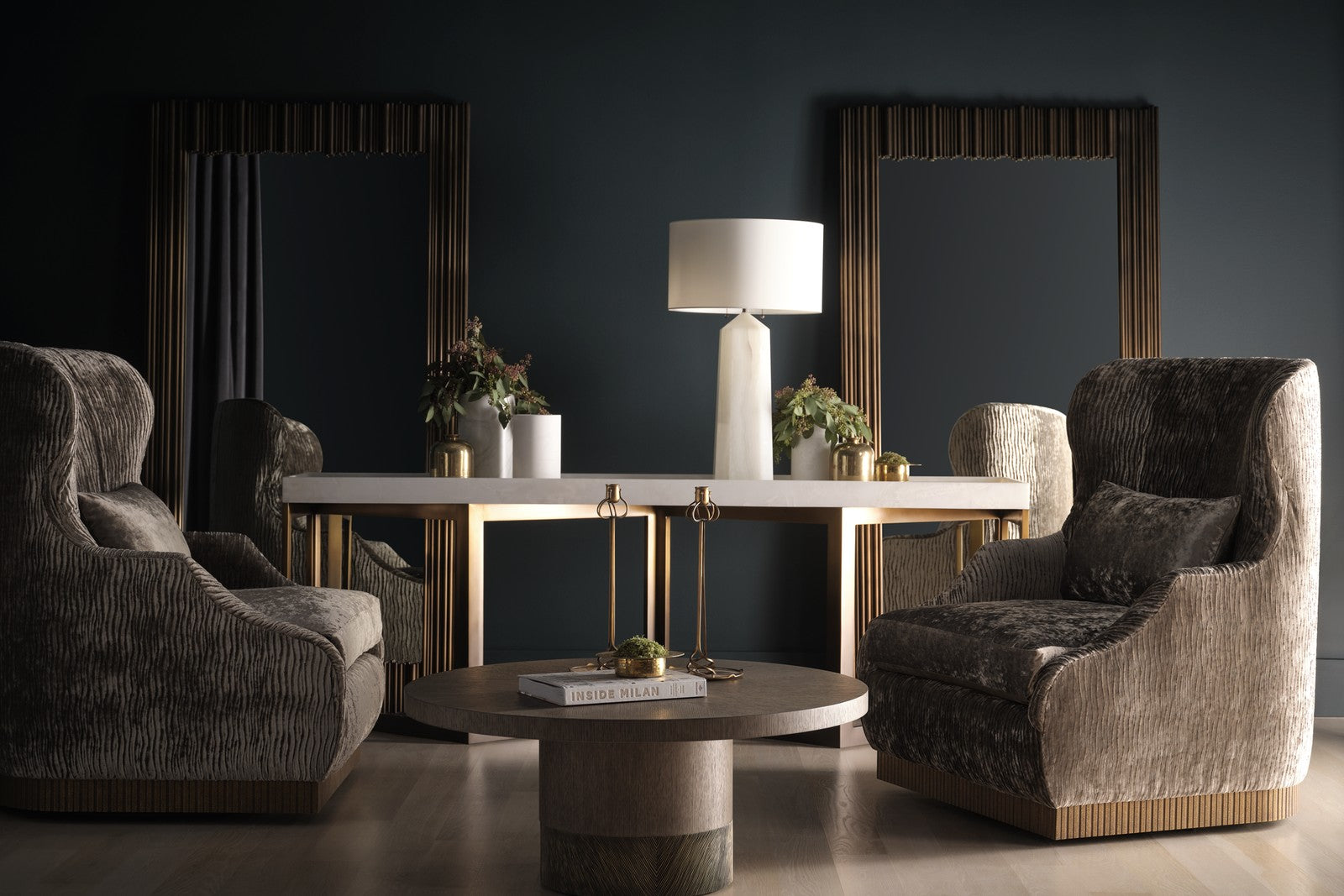
A tray defines a zone on an open surface, so smaller objects read as a composed group rather than scattered pieces. Place the tray first, then build within it. Keep objects inside the tray's perimeter and leave a visible border of tray around them.
On a coffee table, a rectangular tray holding two or three small vessels and one object in a contrasting texture creates a still-life effect. On a console, the tray anchors one end while a taller vase stands freely at the other. The contrast between a contained group and a single standing piece gives the eye a clear path across the surface.
What Sizing Rules Should You Follow Before You Order?
General proportion rules apply regardless of which pieces you choose.
| Surface type | Suggested max object height | Notes |
|---|---|---|
| Low coffee table (16 to 18 inches tall) | 10 to 14 inches | Keep sight lines clear across seating |
| Console (30 to 34 inches tall) | 18 to 24 inches | Taller pieces work best at the ends |
| Floating shelf | 8 to 12 inches | Shelf depth limits how far pieces project |
| Mantel | 12 to 20 inches | Pair with lower flanking objects |
Measure your surface before ordering. A vase that reads substantial in a photograph can disappear on a wide console or crowd a narrow one.
Frequently Asked Questions
Can Global Views vases hold fresh or dried flowers?
Most vessel-form vases are suitable for dried stems or branches. For fresh flowers, check that the neck opening is wide enough to accommodate your stems, and confirm the interior is sealed before adding water.
How do you mix the rust and petal finishes in one room?
Use the rust tones as the warmer anchor on a console or mantel, then introduce petal or rainwashed pieces on a shelf or side table nearby. Repeating one finish in two areas of a room ties the palette together without forcing an exact match.
Do the slab-backed Brim vases need wall support?
The Brim vases are freestanding objects, not wall-mounted pieces. The backplate gives them a flat rear face so they sit flush and stable against a wall, but they require no hardware or installation.
The Sutter & Vale Team