Century Furniture: The North Carolina House That Grades Every Finish by Hand
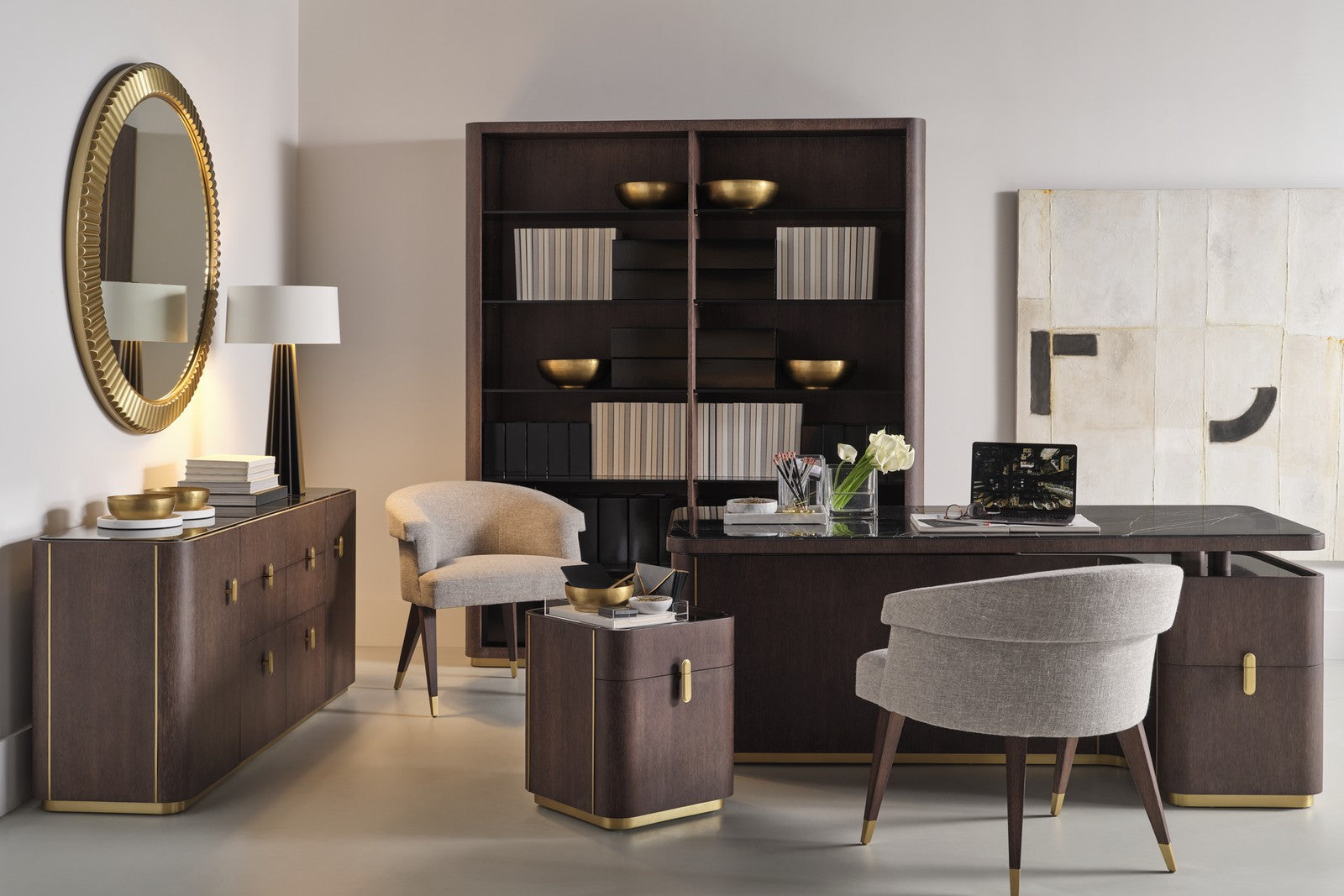
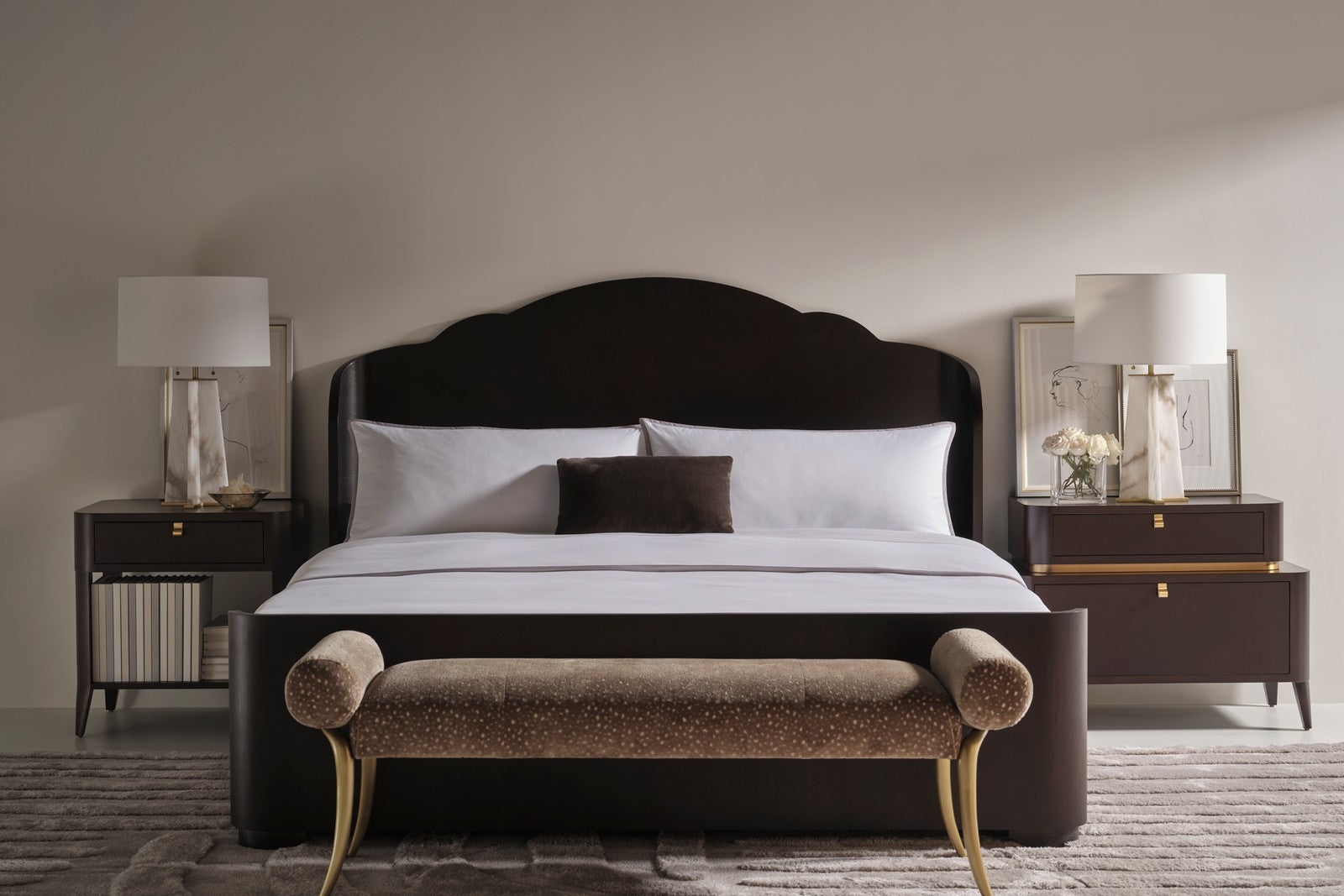
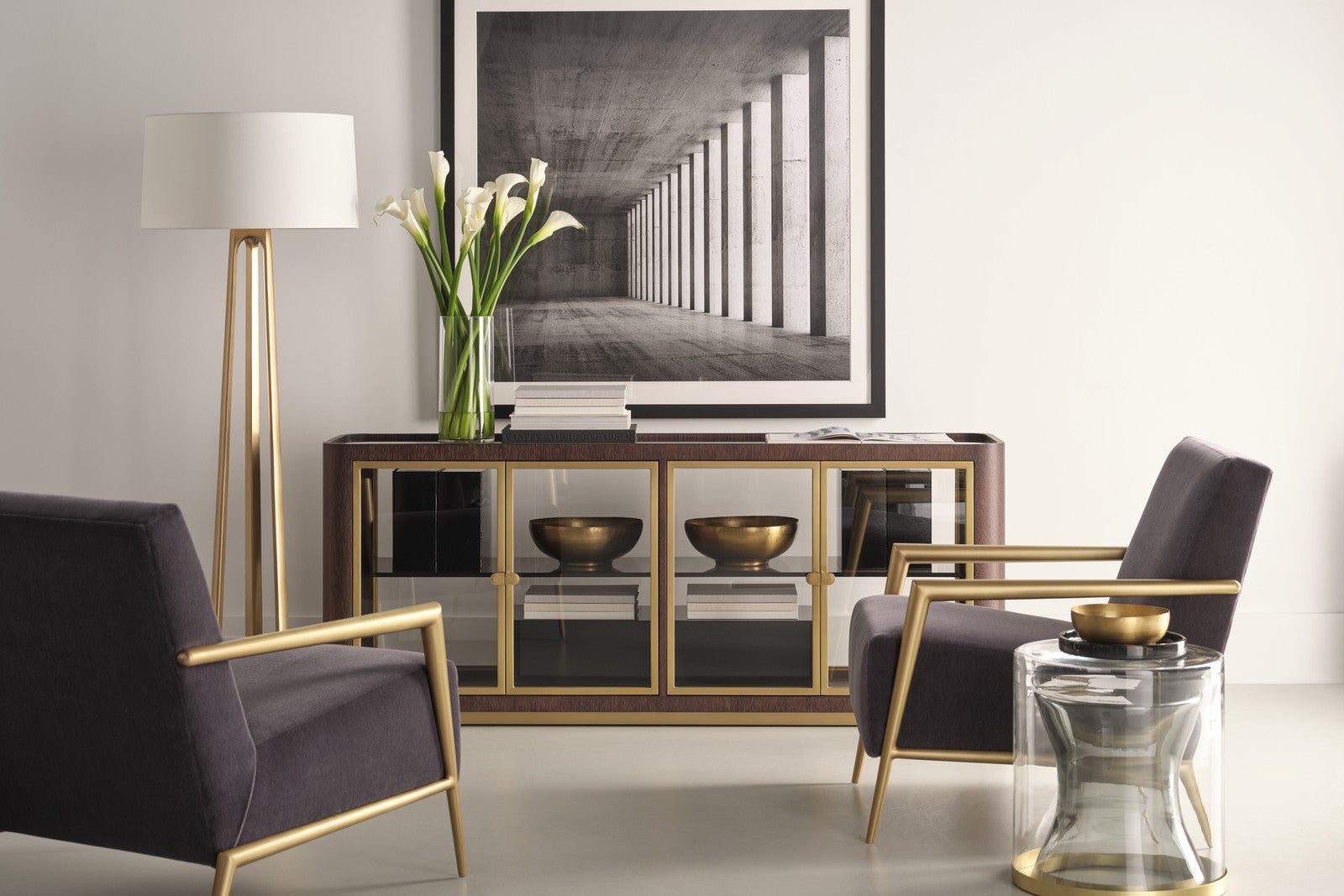
Century Furniture, the North Carolina house available through Sutter & Vale, finishes every casegood by hand in its Hickory workshops. That process runs to roughly 25 steps and includes a graded distressing scale unique among the heritage houses we carry. The result is furniture you specify to a room rather than a photograph.
What makes Century's finishing different from other American furniture houses?
Century is recognized in the industry as a design leader in finishing, and the process is specific. Each wood surface moves through distressing, multiple finish applications, and a final hand-padding step before a lacquer coat is applied. Three techniques define the top of that range:
- Hand Waxing: a skilled artisan applies a beeswax-and-carnauba formula and rubs it to a high sheen, deepening complex multi-step finishes.
- Leafing: thin foil sheets of silver or gold leaf are applied by hand to carvings and moldings, then worn through and burnished to simulate aging.
- Dry Brushing: a gold or silver powder is mixed with clear glaze or lacquer, applied to a brush until nearly dry, then worked across the surface for a result more subtle than leafing.
Sheen is specified numerically: Low (5 or 10), Medium (20 or 30), and High (50 or 70). One rule worth knowing: a high-sheen finish is not recommended on heavily distressed pieces, and Century states this directly.
How does Century grade distressing, and why does that matter when you specify?
Every Century casegood carries a published distressing level on a five-point scale. Before a piece is built, you know exactly where it sits on that scale.
| Grade | Character |
|---|---|
| N/A | No distressing applied |
| Very Light | Barely perceptible surface variation |
| Light | The house default; gentle aging character |
| Medium | Visible hand marks and surface relief |
| Heavy | Pronounced distressing throughout |
Light is the most common grade across the casegoods line. When a client wants certainty about how aged a piece will read in a room, this scale gives you a concrete answer before the order is placed.
What is the finish customization ladder, and which tier should you choose?
Century's finish program runs from a single fixed option up to decorated embellishments. Most pieces fall into one of these tiers:
- As Shown Only: one finish, no substitution.
- Group A Finish: the standard library, no upcharge.
- Group B / Group D Finish: progressively higher tiers in complexity or material.
- Standard Combo / Premium Combo: two-tone specifications, typically the case in one finish and the drawers or top in another.
- Hand Waxed: the beeswax-and-carnauba application, priced as a separate option.
- Finish Embellishments: leafing, dry brushing, and related decorative techniques.
Named finishes worth specifying include Gustavian White, Gustavian Black, Napa, Brownstone, and Oxford White. The Gustavian tones draw from Scandinavian antique precedents and read particularly well on pieces with carved or architectural detail.
How large is Century's customization program beyond finish?
The upholstery side of the program is where the full scale of Century's tagline, "Infinite Possibilities. Unlimited Attention.," becomes literal. Fabric grades run from 1 through 92. Leather grades run L1 through L13. Per piece, you can also specify contrast welt, contrast cord, standard welt, and nailtrim options such as the 3/8-inch Smooth Brass nailhead.
For casegoods, materials include American walnut veneers, mahogany solids, maple, beech, walnut, poplar, and eucalyptus veneers. Specialty veneers include Oak Mappa Burl, Cluster Maple, and Mappa Burl. Surface materials extend to travertine, tempered glass, stone, mirror, shagreen, and parchment. You can see the range of forms the program produces across the Century collection at Sutter & Vale, from the circular silhouette of the Tribeca Round Cocktail Table to the slender frame of the Augustine Occasional Table.
The vast majority of Century furniture is manufactured in Hickory, North Carolina from predominantly domestic materials. Domestic production is what allows the house to hold finish and construction standards across a complicated specification.
Frequently Asked Questions
Can I order a Century piece in a finish not shown on the product page?
Yes, in most cases, though the range depends on the piece. Each casegood is assigned a finish tier, and your available options sit within that tier's library. Some pieces are listed as As Shown Only, meaning no substitution is available. Your Sutter & Vale account manager can confirm the tier for a specific SKU before you specify.
What should I ask about distressing when placing a casegoods order?
Ask for the published distressing grade of the piece you are specifying. Century assigns every casegood one of five grades, from N/A through Heavy, so there is a documented answer for every SKU. If you are also choosing a high-sheen finish, note that Century does not recommend sheen levels of 50 or 70 on heavily distressed items.
Does Century accept COM for upholstery?
Century has COM capability across its upholstery program. The house runs one of the deepest upholstery programs in the American trade, so in most cases a fabric from its own grade ladder will cover the specification. When a project calls for a proprietary textile, COM is a documented option worth confirming with your account manager at the time of order.
The Sutter & Vale Team