Caracole Dining: Tables and Chairs for Rooms That Entertain
Caracole dining tables and chairs solve a specific problem: how to make a room that entertains feel considered without feeling stiff. Available through Sutter & Vale, the Caracole collection spans sculptural table bases, glass and wood tops, and a wide range of chairs built around layered finishes and forms bold enough to carry a room on their own.
What Table Shapes Does Caracole Offer, and How Do I Choose?
Your table shape should follow your room's footprint and how guests move through it. Caracole offers rectangular, oval, and architectural glass-top forms.
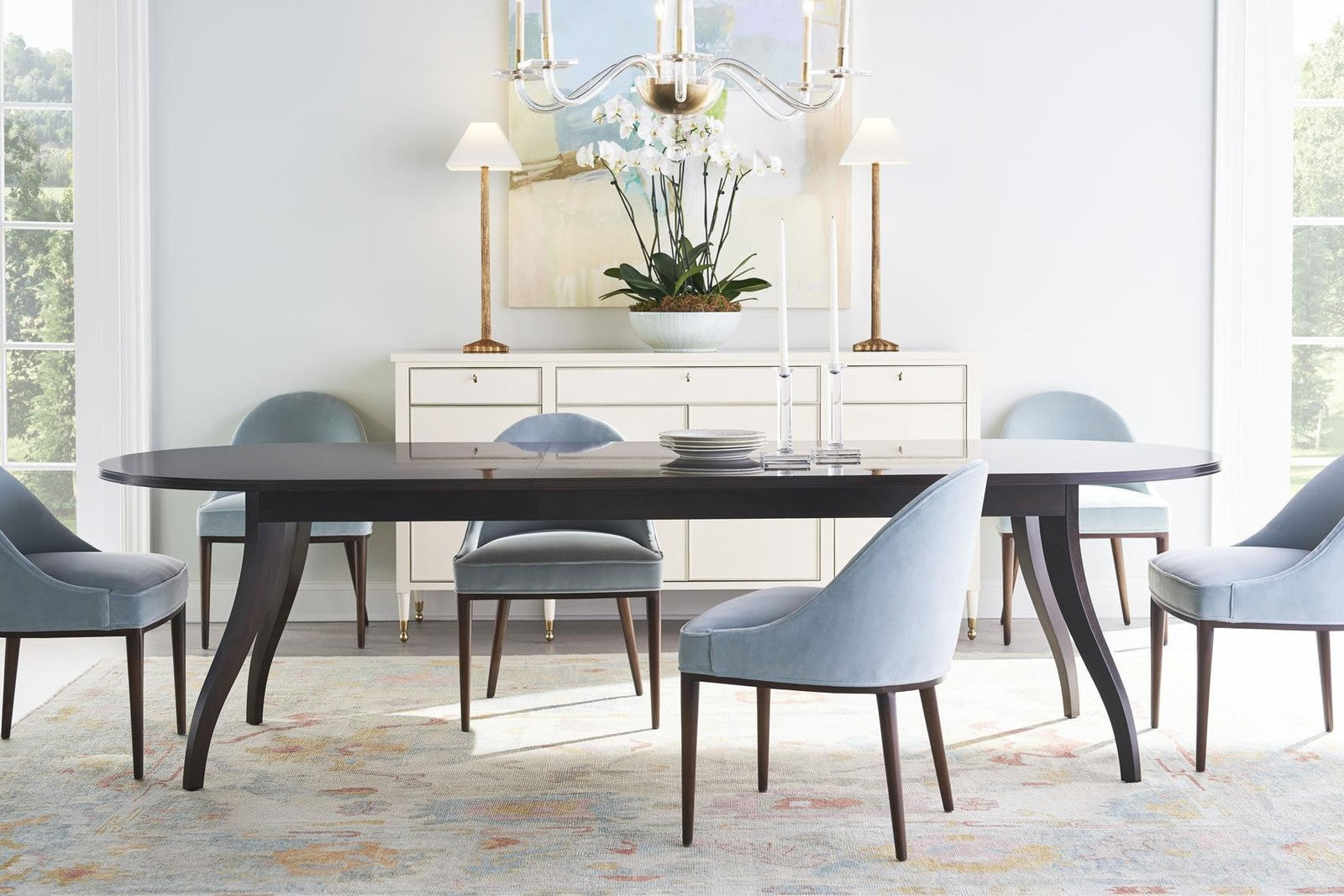
A rectangular table suits a traditional dining room with clear walls on each side. An oval top softens the geometry and improves flow in tighter spaces, because there are no corners to navigate. Glass tops, whether clear or smoked, read as lighter in a room and let the base become the focal point.
Two tables show the range well. The Counter Balance Dining Table rests a Smoked Bronze glass top on a custom-cast Brushed Gold base with channeled cross members, a piece where the base carries the statement. The Viola Oval Dining Table takes an elongated silhouette in Smoked Bronze glass over a modern walnut base, which softens the architectural quality and improves circulation around the table.
How Many Seats Should I Plan For?
Allow 24 inches of table edge per person as a standard rule for comfortable seating.
| Table length or size | Comfortable seat count |
|---|---|
| 60 inches | 4 to 6 |
| 72 inches | 6 |
| 84 inches | 6 to 8 |
| 96 inches | 8 |
| Oval, 78 to 84 inches | 6 to 8 |
Allow at least 36 inches between the table edge and the wall so chairs can pull out fully. Forty-eight inches is better if the path also serves as a pass-through.
Which Caracole Chair Works for a More Formal Room?
For a formal setting, look for chairs with stronger silhouettes and finish contrast. The Champagne Side Chair draws on the Klismos tradition: a Brushed Gold back splat with a Palladian arch, splayed back legs in Almost Black, and a sleek upholstered seat. The contrast between metal and dark wood does the work a tablecloth would in a more traditional room.
The La Lune dining chair takes a different route. Its upholstered back sits inside a metal circle, with a sliver of open space around the edges. Dimensions are 23 inches wide, 13.5 inches deep, and 38 inches tall. It reads as sculptural from across the room without adding visual weight at the table.
Which Chairs Suit a More Relaxed or Mixed-Use Dining Room?
For rooms that double as everyday gathering spaces, softer upholstery and rounded backs create a more welcoming feel. The Next Course dining chair offers a barrel back with sloping slim arms and a faceted post in Dark Chocolate, a shape that invites guests to stay at the table. The Moxie Dining Chair in ivory is upholstered in chunky chenille with a Whisper Of Gold metal base, which handles everyday use while still catching the light.
Mixing chair styles at a single table is a common approach. A pair of arm chairs at the heads paired with side chairs along the length adds variety and makes the room feel assembled over time rather than bought as a set.
- Use arm chairs at the table ends for host seats; they read as anchors
- Side chairs along the length keep sightlines open across the table
- Repeating one finish, such as Brushed Gold or Dark Chocolate, ties different chair profiles together
Frequently Asked Questions
Are Caracole dining chairs made to order?
Some Caracole chairs, including the La Lune, are made to order and may offer custom options. Check each product page for lead times and available specifications before planning your room timeline.
Can I use Caracole dining chairs with a table from another house?
Yes. The primary considerations are seat height and scale. Most dining chairs sit between 18 and 19 inches from floor to seat, which pairs with standard 30-inch dining tables. Confirm dimensions on each product page against your existing table height.
How do I care for a smoked glass dining table top?
Use a soft, lint-free cloth with a mild glass cleaner. Avoid abrasive pads, which can scratch the surface. Place felt pads under any objects that rest on the glass regularly.
The Sutter & Vale Team