Baker Furniture and Finn Juhl: The 1951 Collection That Brought Danish Modern to America
Baker Furniture introduced Danish Modern to the American market in 1951, when Finn Juhl partnered with Baker to produce the first Danish Modern furniture collection manufactured for American homes. Sutter & Vale carries the full Baker collection, a line whose record of design firsts remains as relevant to buyers today as it was seventy years ago.
What exactly did Baker and Finn Juhl do in 1951, and why does it matter?
Baker put Danish Modern into American living rooms before any other manufacturer. Finn Juhl, already celebrated in Denmark for furniture that treated the seat and frame as separate sculptural elements, partnered with Baker to bring that language to American production. The collaboration was a purpose-built collection for the American market, made in America, at a moment when the country had no vocabulary yet for that kind of restraint and precision.
Danish Modern is now a mass-market reference point, reproduced at every price level. What most buyers do not know is that Baker introduced the original. That history reframes what the house is: not a manufacturer that follows, but one that discovers.
What is Baker's broader record as a design-first house?
Baker has introduced categories, not just pieces. Its record, verified against the company's own published design history, reads as a sequence of American furniture firsts:
- 1890: Siebe Baker, an immigrant from the Netherlands, founds a cabinet and interior woodwork company in Allegan, Michigan
- 1925: the Art Deco "Twentieth Century Shop"
- 1927: debut of work by modernist Kem Weber
- 1932: the Manor House collection, described by Baker as "the first great furniture reproduction program in America"
- 1949: the Far East Collection, "the first truly Asian furniture collection manufactured in the U.S."
- 1951: the Finn Juhl partnership, the first Danish Modern collection for the American market
- 1996: the Barbara Barry Collection launches
Each entry marks a moment when Baker saw a design direction before the American market had named it.
How does Baker's craft hold up that history today?
The making is specific enough to examine. Baker produces case goods and upholstery at its plant in Hildebran, North Carolina, alongside international manufacturing. Hand carving, inlay, marquetry, and veneering are all active techniques in current production. On veneering, Baker states plainly that it "allows use of highly figured, expensive, and volatile woods in a durable application," which addresses the common misconception that veneer is a cost-cutting measure. In Baker's practice, it is how you work with the most complex woods at all.
Upholstery is constructed with hand-cut fabrics basted and re-basted to each silhouette. The house uses the word "couture" to describe this process, and the construction detail justifies it.
The Slatted Walnut Chair shows how that discipline applies to a mid-century-informed form: solid walnut, an architectural slatted back, joinery that carries the visual weight. The Dining Side Chair holds the same attention in a more traditional register, with a solid hardwood frame and COM options that let the piece work across a range of dining room palettes.
What should a buyer or designer take from this history when specifying Baker today?
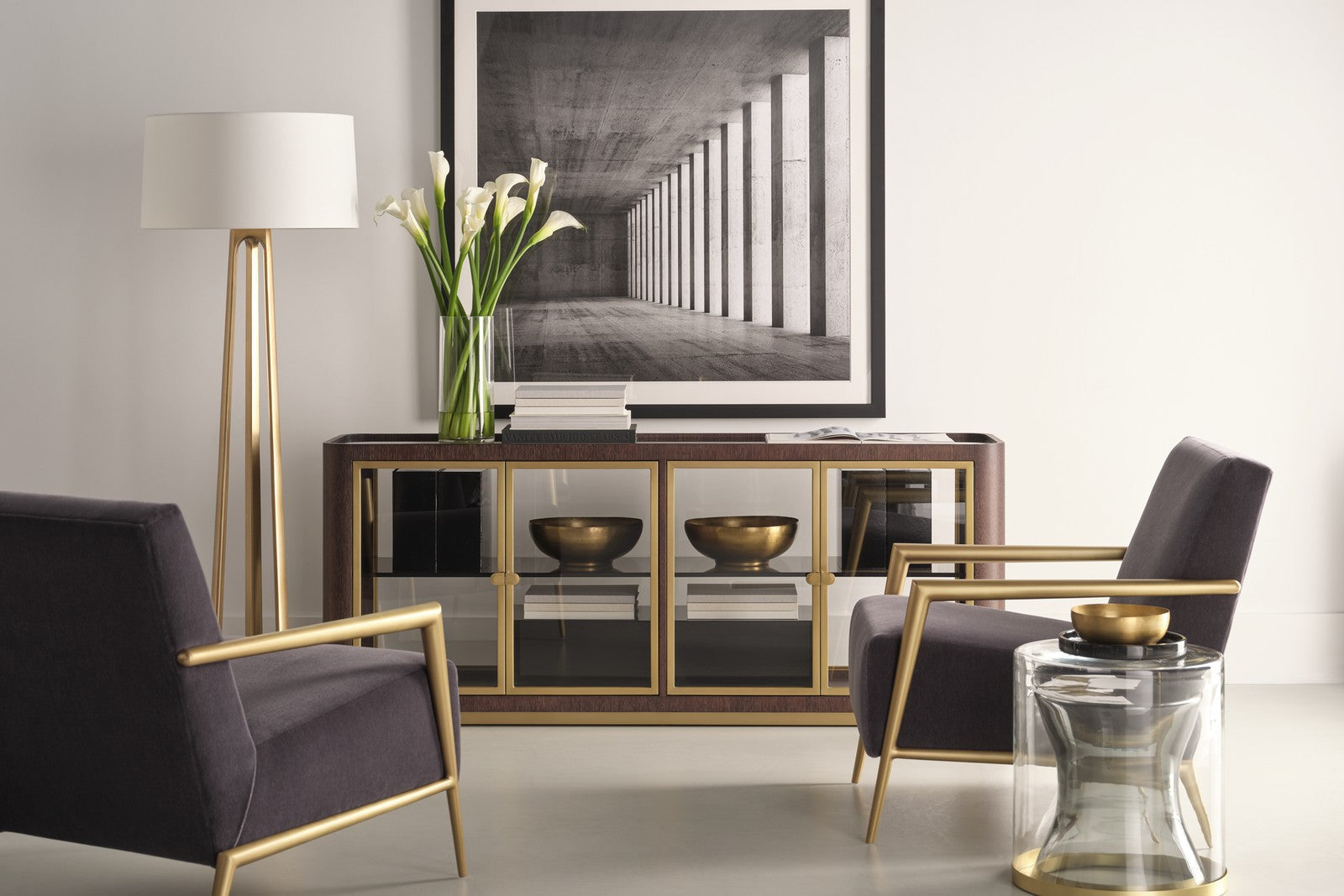
Specify Baker where the piece is the room's anchor. The house has never positioned itself as a supporting player. Its living room and dining room work is conceived at scale, with proportion and materiality that reads from across the room.
For a buyer who values knowing where a house has been, the 1951 Finn Juhl partnership is a straight line to the present. The house that introduced Danish Modern to America is the same house that works today in cast bronze, leathered stone, and hand-finished oak. The approach is consistent even as the materials and designers change.
If you are layering seating around a Baker anchor piece, the Antalya Laced Rawhide Armless Chair offers a textural counterpoint through its hand-laced rawhide construction, a good example of how Baker's broader family handles material detail at a smaller scale.
Frequently Asked Questions
Was the 1951 Finn Juhl collection the first Danish Modern furniture made in America?
Yes. Baker's 1951 partnership with Finn Juhl produced the first Danish Modern furniture collection manufactured for the American market. Danish Modern is widely referenced today, but Baker introduced it to American homes before the aesthetic had a common name in the United States.
Where is Baker furniture made?
Baker produces case goods and upholstery at its plant in Hildebran, North Carolina, and also works with international factories. The Hildebran facility is where the hand-applied finishing techniques and proprietary upholstery construction methods are centered.
How do I find Baker pieces at Sutter & Vale?
The full range of Baker furniture available through Sutter & Vale is listed in the Baker collection, organized by category across seating, case goods, dining, and bedroom.
The Sutter & Vale Team