3 Quick Ways to Make Your Living Room Feel More Expensive This Weekend
Three changes make the biggest difference in a living room: lighting quality, the scale of your art and objects, and editing down to fewer, more considered pieces. Global Views, available through Sutter & Vale, makes all three moves easier with a living room collection built around texture, proportion, and material interest.
How does lighting change the way a room feels?
Lighting is the fastest change you can make, and it costs you one afternoon. Overhead fixtures flatten a room. Table lamps layer light at eye level, which is where a space starts to feel considered rather than accidental.
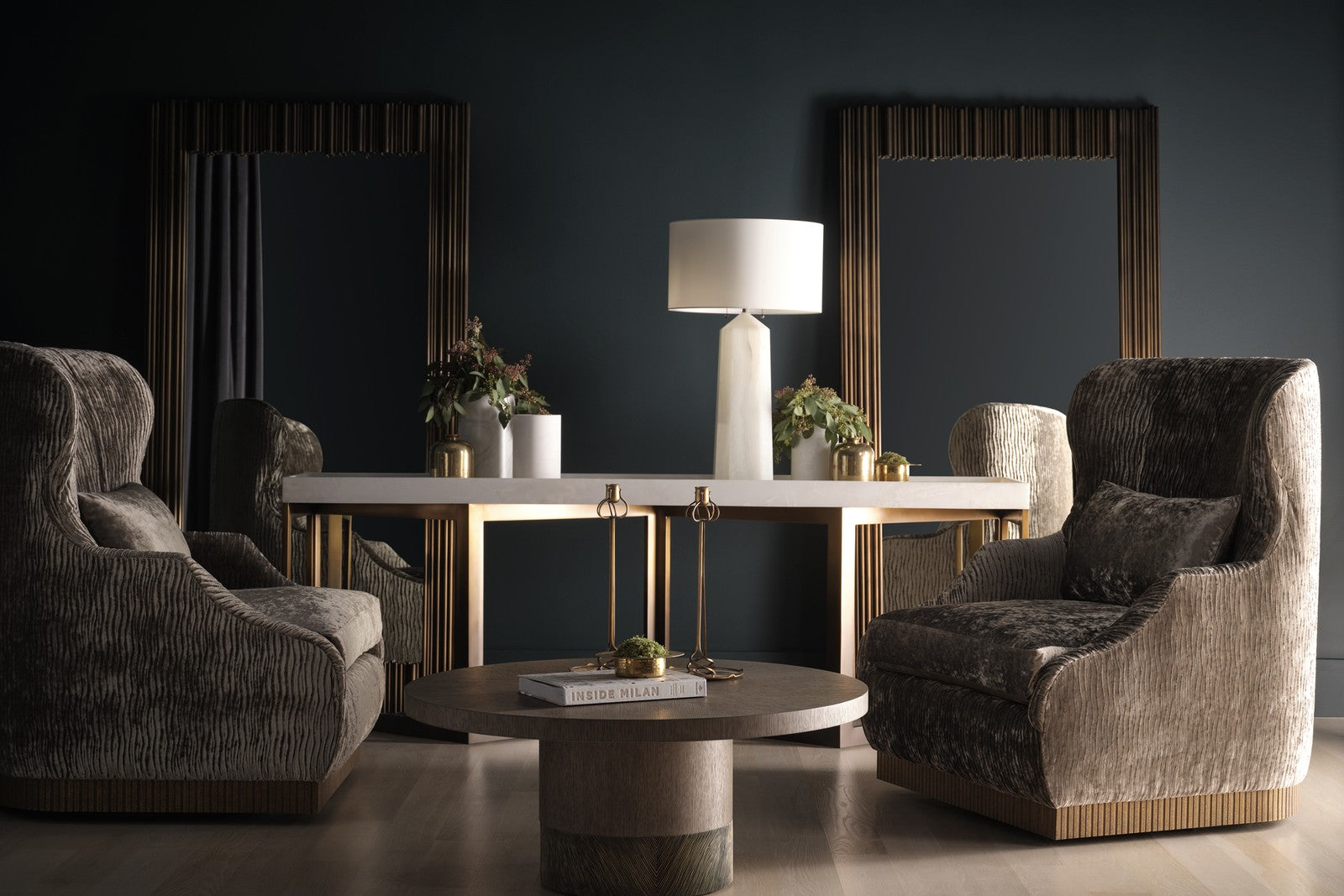
The key is choosing a lamp base that reads as an object in its own right. The Kasia Square Alabaster Lamp in Brass does this: the honey-veined stone block base has enough visual weight to anchor a console on its own, before you even switch it on. The Lido Ceramic Table Lamp in Beige/Blue works differently, its rounded high-gloss form catching ambient light like a piece of sculpture. Place one at each end of a sofa or flanking a fireplace. Two lamps, even modest ones, always read as more deliberate than one.
A few sizing rules to keep in mind:
- Lamp height: the bottom of the shade should sit roughly at seated eye level, around 58 to 64 inches from the floor when measured from the table surface up
- Shade width: should be no wider than the table surface it sits on
- Base clearance: keep at least 6 inches of table surface clear around the base
Does the scale of art and objects actually matter that much?
Scale is the single most common mistake in living rooms, and fixing it costs nothing but a trip to your storage room. Objects that are too small disappear. A grouping of many small things reads as clutter. One object with enough height, mass, or material presence reads as intention.
This is where Global Views excels. The Shells on Marble Miter Gold Leaf in the large size is a single gilded spiral shell on a chalky white pedestal, and it commands attention the way a small figurine never could. It does not need company. On a console, it becomes a focal point. The medium and small versions work well when you want a considered grouping at varying heights, but lead with the largest piece.
Art follows the same rule. A single canvas hung at the correct height, with the center around 57 to 60 inches from the floor, will always look more considered than a wall covered in smaller frames.
How do you edit a room down to fewer, better pieces?
Remove more than you think you need to. Then remove one more thing. What stays should earn its place through material quality, form, or meaning.
A practical approach: take everything off your coffee table, sideboard, and shelves. Put back only three categories of object.
- Something with natural material: stone, alabaster, or shell
- Something with height or verticality: a lamp, a tall vase, a sculptural form
- Something with contrast or texture: a matte finish against gloss, dark against light
The Labbro Round Box in Alabaster handles the first category on its own. Cut from a single piece of stone with ghostly veining, it reads as sculpture on a coffee table or console. The Veruca Stacked Marble and Metal Lamp in Black and Brass handles verticality and contrast in one piece, alternating charcoal and brass discs into a graphic, totem-like base. You do not need ten things. You need the right three.
Frequently Asked Questions
How many decorative objects should a living room coffee table have?
Most coffee tables read best with three to five objects of varying height. Group them loosely rather than lining them up, and keep the center of the table clear enough that it remains functional. Less is almost always more effective than more.
What lamp height works for a standard sofa side table?
For a side table next to a sofa, look for a total lamp height, base plus shade, of around 26 to 30 inches. This places the bottom of the shade near seated eye level and keeps the light from shining directly into a seated guest's eyes.
Can one statement object really change the feel of a room?
Yes, particularly when it has genuine material weight: stone, metal, or a gilded finish at meaningful scale. A single well-chosen piece signals that the room was assembled with intention, which is the quality most people associate with rooms that look expensive.
The Sutter & Vale Team